Daijiworld Media Network - Mumbai
Mumbai, Sep 17: Tata Sons' board on Thursday approved two major decisions concerning the future of the holding company of the Tata Group, clearing the way for the company to move towards a stock-market listing and approving a fresh five-year term for chairman N Chandrasekaran.
The decisions came at a crucial board meeting held less than a week after the Reserve Bank of India (RBI) rejected Tata Sons' application to voluntarily surrender its registration as a Core Investment Company (CIC). The RBI's decision means Tata Sons remains subject to the regulatory framework requiring an upper-layer NBFC to be listed.
According to reports, the board backed the listing plan despite opposition from Tata Trusts chairman Noel Tata, who is also a nominee director on the Tata Sons board. Noel Tata opposed the move and had favoured challenging or seeking a review of the RBI's decision. Reports said the listing proposal was approved over his objections.
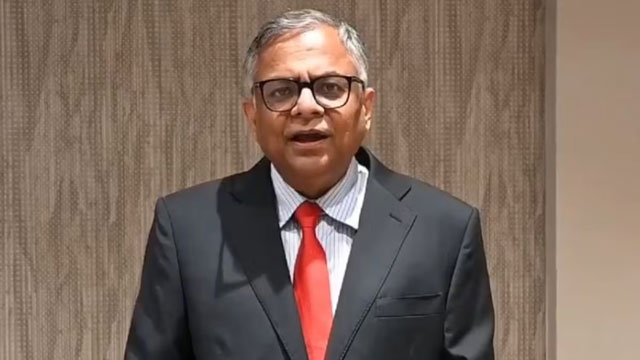
The meeting also resulted in an unexpected reversal on Chandrasekaran's tenure. The board approved a further five-year term for the executive chairman, despite Chandrasekaran having informed directors last month that he would not offer himself for reappointment after his current term expires in February 2027. Reuters reported that the decision represents a reversal of his earlier position.
Chandrasekaran became chairman of Tata Sons in 2017 and is currently serving his second five-year term. His decision not to seek another term had followed differences within the Tata Sons board and Tata Trusts over his continuation. Noel Tata had opposed the proposed third term at a February board meeting, while concerns had also been raised about the performance of some Tata Group businesses.
The question of Chandrasekaran's continuation had remained unresolved for several months. Tata Trusts had earlier supported extending his tenure, but Sir Dorabji Tata Trust later stated that it respected Chandrasekaran's decision not to seek reappointment and had initiated steps towards selecting a new chairman.
The board's latest decision has therefore reopened the leadership issue. Sources cited by Moneycontrol said the September 17 board vote was 4-1 in favour of Chandrasekaran's continuation, with Noel Tata dissenting.
Another point of contention has involved Venu Srinivasan, a Tata Trusts nominee on the Tata Sons board. Srinivasan had publicly supported the listing of Tata Sons, arguing that it could improve governance and provide an avenue for raising funds. He was also reported to be supportive of Chandrasekaran's continuation.
The differences between the Tata Trusts representatives became particularly significant because Tata Trusts collectively holds about 66% of Tata Sons. The ownership structure gives the trusts a central role in decisions concerning the holding company's leadership and future direction.
The listing issue has its roots in Tata Sons' classification as an upper-layer non-banking financial company. Tata Sons had sought to surrender its CIC registration after becoming debt-free, in an attempt to avoid the regulatory requirement applicable to upper-layer NBFCs. The RBI rejected that request in a letter dated September 11, leaving the listing requirement in focus.
Tata Sons has substantial stakes in major listed Tata companies, including Tata Consultancy Services, Tata Motors and Tata Steel, besides its interests in several unlisted businesses. The company had sought to remain privately held, while the Shapoorji Pallonji Group, its second-largest shareholder with about 18% stake, has supported a listing.
The board's decision does not by itself complete a stock-market listing. Further corporate and regulatory steps will be required, and the matter is expected to come before Tata Sons shareholders at an annual general meeting.
The timing of the AGM itself has been complicated by an ongoing issue involving the Sir Ratan Tata Trust. Tata Sons' Articles of Association require the two principal trusts, Sir Ratan Tata Trust and Sir Dorabji Tata Trust, to jointly select a representative for the AGM. The inability of the trusts to complete that process has already affected the company's annual meeting.
The RBI decision has also opened the possibility of legal proceedings. The central bank has filed a caveat in the Bombay High Court, which would ensure that it is heard before any order is passed if its decision is challenged. The filing itself does not mean that Tata Sons has initiated a legal case.
Thursday's decisions consequently bring together two issues that had remained uncertain for months — Tata Sons' regulatory status and the succession of its chairman. The board has now backed a move towards listing while also retaining Chandrasekaran for another five-year term, although the decisions remain subject to the applicable shareholder and regulatory processes.