Daijiworld Media Network - Panaji
Panaji, Sep 21: Goa could get its first floating solar power project with a proposed 3.6 MWp solar plant on the backwaters of Panaji, coupled with a battery energy storage system (BESS) aimed at shifting solar power to periods of higher electricity demand.
The project, proposed under the PM-SSY, envisages a 3.6 MWp DC/4.38 MW AC floating solar photovoltaic plant integrated with a preliminary 1.10 MW/4.4 MWh battery storage system. The proposal is currently at the preliminary assessment stage, with preparation of a detailed project report (DPR) underway.
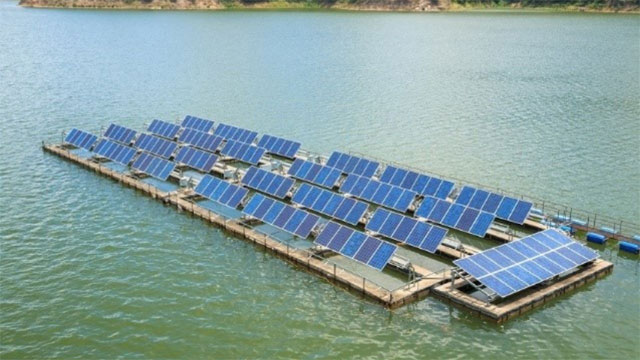
According to the proposal put forward by the Goa Energy Development Agency, the floating solar plant is expected to generate around 7,198 MWh of electricity annually. Around 20 per cent of this generation, or approximately 1,439.6 MWh a year, would be allocated for charging the battery system.
The BESS has been designed for one charge-discharge cycle per day, with around four hours of continuous discharge.
“The battery component is expected to enable the State to time-shift solar energy generated during the day to periods of peak or higher electricity demand,” the proposal stated.
The indicative additional investment for the battery storage component is estimated at Rs 5.50 crore, while the floating solar component is expected to cost around Rs 20 crore.
The proposal outlines three possible implementation models — Capital Expenditure (CAPEX), Build-Own-Operate (BOO) and Build-Own-Operate-Transfer (BOOT) — depending on the preferred financing, ownership and risk-sharing structure.
Under the CAPEX model, the State or utility would finance and own the project. The BOO and BOOT models would involve private investment, with the BOOT model providing for eventual transfer of the assets to the State or utility.
The Panaji backwaters project is also being considered as a potential demonstration model for wider deployment of floating solar projects integrated with battery storage on suitable water bodies.
However, the proposal makes clear that the current configuration is preliminary. The final capacity and operating strategy will have to be optimised during the DPR stage after considering generation patterns, electricity demand, grid constraints and other techno-economic factors.