Daijiworld Media Network - Mumbai
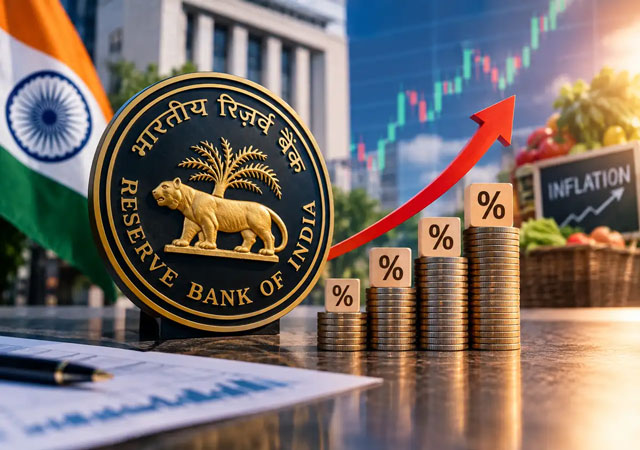
Mumbai, Oct 5: Investors are increasingly betting that the Reserve Bank of India will raise interest rates at its policy meeting this week, as inflation picks up, economic growth remains resilient and major central banks adopt a more hawkish stance.
Nearly 60 per cent of economists polled by Reuters, or 35 of 61, expect the RBI to raise its benchmark rate by 25 basis points at its meeting on Wednesday. Market pricing is even more decisive, with swap markets fully factoring in an increase in borrowing costs.
If delivered, the hike would be the RBI's first in nearly four years and would take the benchmark repo rate above its current 5.25 per cent. The Monetary Policy Committee had cut rates by a cumulative 125 basis points in 2025, from 6.5 per cent to 5.25 per cent.
“We now sense that the RBI has little reason to wait, given visibility of growth remains high, inflation appears to be broadening, and the need to wait for clarity on the global front declines,” said Rahul Bajoria, India and ASEAN economist at BofA Global Research.
Bajoria expects the central bank to begin a 100-basis-point tightening cycle in October, with further hikes likely in December and the first half of 2027.
“This essentially is no longer just about reversing the incremental cut that the RBI had delivered last December but actually taking away the monetary punchbowl before inflation risks become entrenched,” he said.
Inflationary pressures have broadened beyond food and fuel after a relatively benign inflation environment earlier in the year had allowed the RBI to wait despite a surge in oil prices following the Iran war.
Consumer inflation rose to 4.82 per cent in August, above the RBI's 4 per cent medium-term target for a third consecutive month. Prices across nearly half of the Consumer Price Index basket were rising at or above the target. The economy grew 7.8 per cent in the April-June quarter.
With inflation above target and markets already pricing in higher borrowing costs, the RBI's decision and guidance are expected to influence expectations for interest rates and capital flows.
Several major central banks, including the US Federal Reserve and Bank of Japan, have raised rates since the US-Israeli war on Iran began seven months ago. Traders and analysts expect the RBI to follow suit, warning that keeping rates unchanged could put pressure on Indian markets.
“A hold will not be taken positively by the currency market and even the long end of the bond market may face some pressure,” said Vivek Rajpal, Asia macro strategist at JB Drax Honore.
The rupee remains under pressure and is about 1 per cent below record lows hit in May.
“India needs to act on multiple fronts and going to a neutral rate is part of the solution,” Rajpal said, pointing to low inflation-adjusted interest rates in India at a time when price pressures have deepened and global competition for capital has intensified.
Economists at Nomura and Barclays expect a relatively shallow 25-50 basis point hiking cycle, while ANZ, BofA and Goldman Sachs expect between 75 and 100 basis points of increases.
Swap markets are pricing in about 100 basis points of rate hikes over the next 12 months and around 140 basis points over the next 24 months.
BofA's Bajoria expects the RBI may not commit to a longer hiking cycle in October itself but could signal greater openness to further increases in December.
The focus will therefore be on any changes to the RBI's inflation and growth forecasts and whether it changes its “neutral” policy stance, providing clues about how far policymakers are prepared to take the tightening cycle.
Goldman Sachs economists expect the RBI's stance could shift towards “calibrated tightening” or “withdrawal of accommodation”.