Daijiworld Media Network - Abu Dhabi
Abu Dhabi, Nov 5: Motorists in the United Arab Emirates will not be permitted to drive for more than nine hours within any 24-hour period under a new set of federal traffic regulations coming into force on January 1, 2027. The rules also prohibit driving while fatigued or exhausted to an extent that affects the ability to operate a vehicle safely.
The provisions are part of Cabinet Decision No. 174 of 2026, which establishes the implementing regulations of Federal Decree-Law No. 14 of 2024 on traffic regulation. The new framework introduces stricter road safety requirements, reinforces pedestrian and child protection, and establishes additional responsibilities for professional drivers and delivery operators.
Under Article 7, the nine-hour driving limit applies to vehicle drivers generally and is not restricted to truck drivers, taxi operators or delivery personnel. The Federal Traffic Council has the authority to amend the prescribed limit.
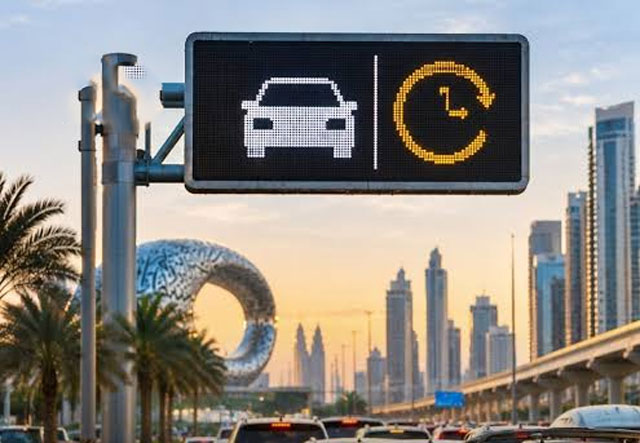
The regulations separately prohibit motorists from driving whenever fatigue or exhaustion affects their ability to drive safely, irrespective of the number of hours already spent behind the wheel. Therefore, a motorist who becomes excessively tired before completing nine hours must stop driving.
However, the provision does not specify how driving hours will be monitored, whether mandatory rest intervals will be introduced or what separate penalty will apply for exceeding the nine-hour limit.
The new rules also strengthen restrictions on distracted and dangerous driving. Motorists are prohibited from engaging in activities that divert their attention from the road, including unlawful use of mobile phones and other electronic devices. Driving under the influence of narcotics, psychotropic substances, alcohol or similar intoxicants is also prohibited.
Drivers must ensure that their vehicles are roadworthy before starting a journey and carry out periodic safety inspections to identify defects that could endanger themselves or other road users. If a vehicle develops a fault that threatens safety or obstructs traffic, it must be removed from the road as quickly as possible.
Seat belts will be compulsory for drivers and all passengers, including those seated in the rear.
The regulations also prescribe additional responsibilities concerning speed limits and pedestrian safety. Speed limits on internal residential roads must not exceed 40 kmph, with the restrictions communicated through appropriate traffic signs.
Motorists must avoid driving in ways that disturb or endanger people in residential neighbourhoods, near educational institutions and around hospitals. They must give priority to pedestrians using pavements and crossing roads, reduce speed while turning and allow people who have already begun crossing to pass safely.
Drivers are also required to slow down when approaching populated areas, bends, curves, slopes, intersections and locations with poor visibility. Particular caution must be exercised near pedestrian crossings, schools and hospitals. Motorists must also allow vehicles ahead to complete indicated turns safely.
The regulations establish specific rules for overtaking, entering roads and reversing. Drivers approaching a paved road from an unpaved road must stop and give way to traffic already using the paved road. They may enter only after ensuring that the road is clear and the manoeuvre will not endanger others.
When another vehicle is overtaking, motorists must reduce speed and keep as far to the right of their lane as practicable. Drivers entering a road from parking spaces or roadside stopping areas must check for approaching traffic, signal their intentions in advance and complete the manoeuvre at low speed.
Reversing is permitted only when necessary and must not obstruct traffic or endanger other road users. Drivers must signal, ensure the road is clear and reverse only as far as required. They must seek assistance from another person when necessary.
On motorways, motorists are prohibited from stopping outside designated areas, reversing, making unauthorised left turns or U-turns, or driving across the central reservation separating traffic moving in opposite directions.
Additional protection has been provided for passengers using school buses and public transport. Drivers must slow down or stop when necessary to allow school transport vehicles and public buses to complete manoeuvres connected with passengers boarding or getting off. Motorists are prohibited from obstructing passengers or driving between a school bus or public transport vehicle and the pavement.
The regulations also prohibit vehicles from joining private processions or gatherings without special permission from the licensing or traffic enforcement authority. Such permits must specify the period of validity, and the activities must not disturb public tranquillity, particularly during night hours.
Article 9 introduces specific safety requirements for cyclists. Bicycle riders must wear protective helmets and travel in single file unless circumstances require otherwise. They cannot use another vehicle to tow or propel their bicycles or carry passengers unless the bicycle is designed and equipped for that purpose.
Cyclists must keep both hands on the handlebars, except when using one hand to give a signal. Weaving through traffic, riding at dangerous speeds and any other conduct that could endanger the public are prohibited.
Article 10 establishes additional requirements for professional drivers and delivery operators. Professional drivers must possess a valid professional driving permit and produce it when requested by the authorities. They cannot undertake professional driving activities without a valid permit or with an expired one.
Drivers must also log into the approved system installed in their vehicles and follow the prescribed operating instructions. Delivery personnel must wear the designated uniform and maintain a presentable appearance.
Motorcycle delivery riders are prohibited from carrying passengers while performing delivery duties. They are also not permitted to use backpacks to transport orders and must instead use approved equipment designed for carrying deliveries. Professional and delivery drivers cannot transport or deliver prohibited materials or items that violate public order.
Licensing and traffic enforcement authorities in individual emirates may introduce additional requirements within their respective jurisdictions.
The wider regulatory overhaul also includes changes to vehicle registration and personal mobility devices. Under Article 89, residents may register up to two vehicles without additional fees, while additional charges will apply for further vehicles, subject to a maximum of five vehicles registered to one resident. Right-hand-drive vehicles will not be licensed for regular road use and will be permitted only for exhibition purposes.
Under Article 98, owners of eligible light vehicles may apply to extend their registration validity from one year to two years, subject to approval by the relevant licensing authority. The option applies to vehicles that were brand new at their initial registration and are not more than six years old from the date of manufacture.
The new framework also introduces permits for electric bicycles, electric scooters and small-wheeled cycles. Applicants must be at least 15 years old, and the permits will remain valid for three years. These devices may be used only on routes and roads designated by the relevant licensing or traffic authority.
Personal mobility devices will also have to meet technical safety standards, including front lights for nighttime visibility, rear position and brake lights, audible warning devices, properly maintained tyres and functioning brakes.
Child safety requirements have also been strengthened. Drivers must provide suitable child safety seats for children aged four and below, taking into account their weight and height. The seats must normally be installed in the rear of the vehicle and comply with applicable safety standards. Exceptions are permitted in specified medical circumstances with official certification. In vehicles without rear seats, a child seat may be installed in the front, provided it faces backwards and the airbag is deactivated.
The new regulations are intended to improve road safety, reduce accidents caused by fatigue and distracted driving, and establish clearer responsibilities for motorists, cyclists and professional transport operators. They will come into force across the UAE on January 1, 2027.