Daijiworld Media Network - Jerusalem
Jerusalem, Nov 5: In a major shift in Israeli politics, former defence chief and Yashar party leader Gadi Eisenkot has secured 67 endorsements in the 120-member Knesset, crossing the 61-seat threshold required for a parliamentary majority and strengthening his chances of being tasked with forming the next government.
Following post-election consultations with President Isaac Herzog, Prime Minister Benjamin Netanyahu's tally stood at 46 endorsements, after his traditional ally, the ultra-Orthodox United Torah Judaism (UTJ), decided to abstain, according to The Times of Israel.
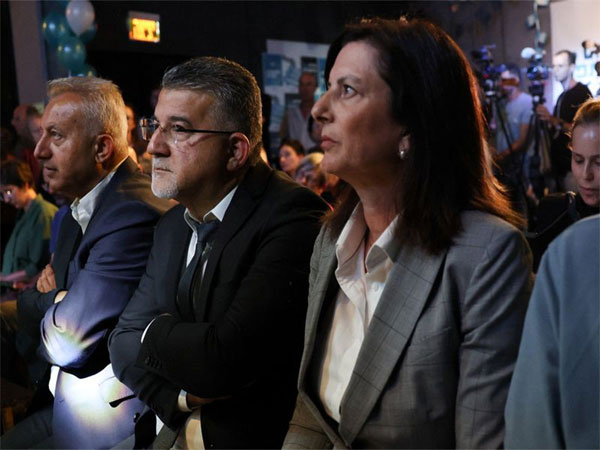
Eisenkot's 67 endorsements include 48 members from the Jewish-led opposition bloc comprising Yashar, Together, The Democrats and Yisrael Beiteinu, eight from the Arab Ra'am party and 11 from the Arab-led Joint List.
The Joint List announced its unanimous decision to recommend Eisenkot, joining the opposition and Ra'am in backing his bid. Its support was described as a move driven by public demand to prevent Netanyahu and his government from returning to power.
However, the Joint List clarified that it would not formally join an Eisenkot-led governing coalition, citing deep policy differences with sections of the Jewish opposition's platform. It may instead extend support from outside the coalition.
The party said its backing was important despite the opposition bloc not having demonstrated sufficient willingness to “confront Netanyahu’s path, as well as to fight incitement against Arab citizens and attempts to undermine the legitimacy of their political decision.”
“Although Eisenkot has received more recommendations than Netanyahu, we believe it is important to widen the gap between them,” the Joint List said.
It argued that the move could improve the chances of replacing the government and reduce the possibility of a unity administration that would allow Netanyahu to remain in power. A Joint List delegation was scheduled to present its recommendation to President Herzog on Thursday afternoon.
The UTJ's decision not to endorse any candidate marks a significant break in its long-standing alliance with Netanyahu. The seven-member party, comprising the four-seat Degel HaTorah faction and the three-seat Agudat Yisrael faction, withheld its support following directives from their respective spiritual leaders.
The move was prompted by growing frustration over Netanyahu's failure to pass legislation granting military service exemptions to yeshiva students. UTJ representatives informed Herzog that their support for any future government would remain conditional on securing the exemptions.
Although Eisenkot's 67 recommendations give him a clear numerical advantage, they do not guarantee that all supporting parties will join his government. President Herzog is expected to formally give him the first opportunity to form the next administration.
Meanwhile, Rabbi Moshe Maya, a senior member of Shas's ruling Council of Torah Sages, has urged Eisenkot to join Netanyahu in a rotation government involving ultra-Orthodox parties and Religious Zionism, according to The Times of Israel.
In an interview with an ultra-Orthodox Israeli newspaper, Maya said, “The only solution is a unity government, and this is Eisenkot’s real moment of truth.”
He urged Eisenkot to avoid the “radical left” and agree to a rotation arrangement with Netanyahu.
Maya argued that Likud and Yashar would together have 48 seats, while the ultra-Orthodox parties Shas and UTJ, along with Religious Zionism, would contribute another 19 seats, bringing the proposed coalition closer to a parliamentary majority.
The proposal comes after Shas suffered a major electoral setback, with its strength falling from 11 seats to six in last week's election, its worst performance since 1992. The party had recommended Netanyahu for the premiership during its consultations with President Herzog.
Maya attributed Shas's losses to declining support among traditional voters amid media criticism of the party's opposition to the enlistment of ultra-Orthodox men in the military.
“Many people who had voted for Shas in the past bought the media’s poisonous messages against yeshiva students,” he said, adding that some traditional right-wing voters had instead chosen Likud.
Separately, opposition parties are seeking to replace Knesset Speaker Amir Ohana during the inaugural session of the 26th Knesset on November 10. Their combined strength is believed to be sufficient to elect a successor, although disagreements over the candidate remain unresolved.
Yisrael Beiteinu and The Democrats have submitted separate letters demanding that the election of a new speaker be included in the agenda for the opening session. Ohana, a Likud lawmaker, said he would schedule an early discussion on choosing his successor if at least 61 lawmakers formally requested it.
Israel's newly elected 26th Knesset is scheduled to convene for its inaugural session on Tuesday, November 10, following the legislative elections held on October 27.