Daijiworld Media Network – New Delhi
New Delhi, Feb 6: A new international study has cautioned that kidney test results labelled as “normal” may still conceal early signs of serious disease, particularly when kidney function is unusually low for a person’s age and sex.
The findings, published in the medical journal Kidney International, are based on a large-scale analysis by researchers from Sweden’s Karolinska Institute, who examined data from over 1.1 million adults in the Stockholm region. Nearly seven million estimated glomerular filtration rate (eGFR) tests — the standard measure used to assess kidney function — were analysed.
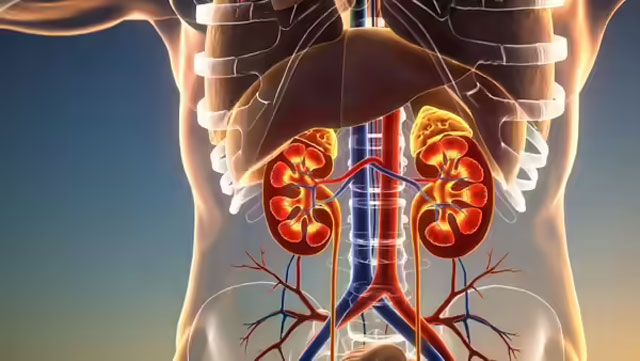
The researchers found that individuals could have eGFR values within the commonly accepted normal range, yet still face a significantly higher risk of developing chronic kidney disease if those values were low compared to others of the same age and sex.
Traditionally, eGFR results are interpreted using broad “normal” ranges that do not adequately account for age-related changes in kidney function. To address this, the researchers developed age- and sex-specific percentile charts, similar to growth charts used for children, allowing kidney health to be assessed more precisely.
The study revealed that adults whose eGFR fell below the 25th percentile for their age and sex — despite remaining above the clinical cut-off of 60 — were far more likely to progress to advanced kidney disease. Some were found to have nearly three times the risk of developing end-stage kidney failure compared to peers with average kidney function.
For example, a 55-year-old with an eGFR of 80 would typically be told their result is normal. However, age-adjusted data shows this value may lie in the lowest 10th percentile, indicating reduced kidney function relative to most people of the same age.
Researchers also noted that many such patients did not receive follow-up urine tests for albumin, an early marker of kidney damage, potentially delaying diagnosis and treatment.
Chronic kidney disease often progresses silently, with symptoms appearing only after significant loss of function. Globally, it affects an estimated 10–15 per cent of adults and is projected to become one of the leading causes of years of life lost by 2040.
The study’s authors have developed free online tools to help clinicians interpret eGFR results using age- and sex-adjusted comparisons, which they say could improve early detection and prevention.
Experts stress that while a “normal” kidney test result remains reassuring, patients — especially older adults — may benefit from a more nuanced assessment to identify hidden risks and take preventive action early.