Daijiworld Media Network – New Delhi
New Delhi, Feb 6: A recent observational study has highlighted the clinical value of transthoracic echocardiography (TTE) in patients evaluated for transient ischemic attack (TIA) under emergency department observation unit (EDOU) protocols in the United States.
The study, drawn from the Wake Forest Emergency Medicine TIA Registry, analysed adult patients aged 18 years and above who were managed at a large academic tertiary care centre between July 1, 2021, and December 1, 2023. Researchers aimed to assess how often TTE identifies high-risk cardiac features that could point to a cardioembolic cause of a neurological event.
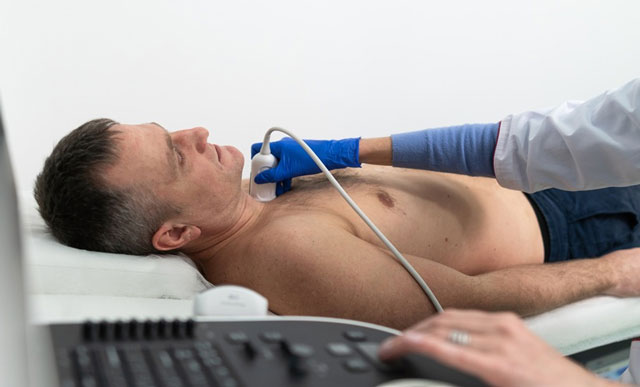
Investigators reviewed TTE reports for predefined high-risk findings, including patent foramen ovale (PFO), left ventricular ejection fraction (LVEF) of 40 per cent or less, focal wall motion abnormalities, and ventricular thrombus. Diagnostic yield was defined as the proportion of patients with at least one of these features detected on TTE.
Out of 686 patients included in the cohort, 460 (67.1 per cent) underwent transthoracic echocardiography. High-risk cardioembolic features were identified in 19.4 per cent of those imaged, translating to a number needed to test of six.
Among the detected abnormalities, patent foramen ovale was the most common, found in 63 patients. Reduced left ventricular ejection fraction (≤40 per cent) was observed in 26 patients, while focal wall motion abnormalities were seen in six. Notably, no cases of ventricular thrombus were identified.
The authors concluded that transthoracic echocardiography plays a meaningful role in emergency department observation pathways for TIA evaluation. The test was particularly useful in identifying patent foramen ovale and reduced left ventricular function, both of which may influence further diagnostic work-up and management decisions in suspected cardioembolic TIA cases.