Daijiworld Media Network - Ranchi
Ranchi, Feb 25: The mystery surrounding the air ambulance crash that claimed seven lives in Jharkhand’s Chatra district is expected to deepen, as initial findings have revealed that the ill-fated aircraft was not equipped with a black box — either a Cockpit Voice Recorder (CVR) or a Flight Data Recorder (FDR).
The aircraft, a Beechcraft C90 (VT-AJV) operated by Redbird Aviation, was a twin-turboprop with a maximum take-off weight of 4,583 kg. Manufactured in 1987, it received its first Certificate of Airworthiness the same year — prior to January 1, 1990, the applicability date for FDR norms, and January 1, 2016, the applicability date for CVR norms.
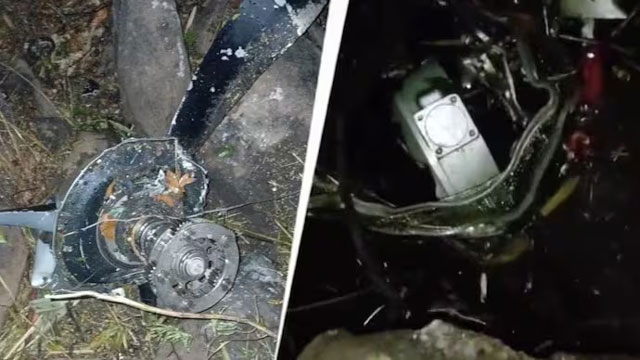
Under prevailing regulations, CVRs are mandatory for aeroplanes with a maximum certificated take-off mass of over 5,700 kg issued airworthiness certificates on or after January 1, 1987. Similarly, as per the Civil Aviation Requirements (CAR) issued by the Directorate General of Civil Aviation (DGCA), multi-engined turbine-powered aircraft weighing 5,700 kg or less and certified on or after January 1, 1990, must be fitted with an FDR capable of recording at least 16 specified parameters.
As the crashed aircraft did not fall within these mandatory categories, there was no regulatory requirement for installing either a CVR or FDR at the time of its certification.
The aircraft had departed Ranchi at around 7.11 pm on February 23 en route to Delhi. Approximately 23 minutes after take-off, it reportedly requested a weather deviation before losing communication and radar contact. The wreckage was later located in a forested area near Simaria in Chatra district.
In the absence of black box data, the Aircraft Accident Investigation Bureau (AAIB) will now have to depend heavily on the final communication exchanged with Air Traffic Control and material evidence recovered from the crash site to reconstruct the sequence of events leading to the tragedy.