Daijiworld Media Network – New Delhi
New Delhi, Jun 24: Researchers from the Indian Institute of Technology (IIT) Roorkee have identified bioactive compounds in cow urine distillate (CUD) that showed significant antiviral activity against the chikungunya virus in laboratory studies, offering fresh insights into the development of future antiviral treatments.
The findings, published in the journal ACS Agricultural Science & Technology, were led by Prof. Shailly Tomar and her team from the Department of Biosciences and Bioengineering at IIT Roorkee in collaboration with researchers from Ayurveda and biomedical institutions across the country.
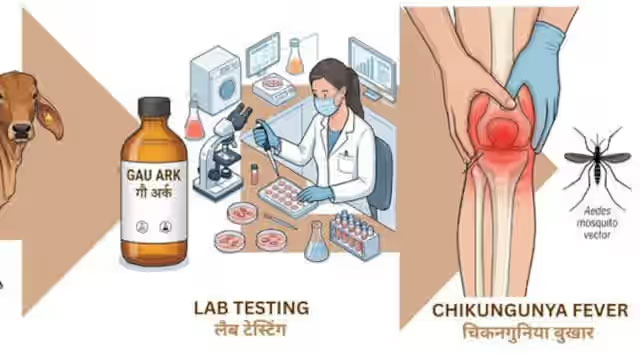
According to the study, cow urine distillate reduced chikungunya viral levels by more than 90 per cent at safe concentrations under laboratory conditions. Researchers also found that an optimised combination of cow urine distillate, thymoquinone derived from black seed (Nigella sativa), and piperine extracted from black pepper reduced viral load by as much as 99.85 per cent.
Using advanced virology, metabolomics, molecular docking and biochemical analysis techniques, the team identified benzoic acid, hippuric acid and oleic acid as key compounds responsible for the antiviral activity. These compounds were found to interfere with viral proteins essential for replication, thereby limiting the virus’s ability to multiply.
The researchers observed that a two per cent concentration of the distillate reduced the virus by nearly 90 per cent, while a four per cent concentration achieved a reduction of over 99 per cent in infected cell cultures.
IIT Roorkee Director Prof. Kamal Kishore Pant said the research highlights the potential of combining traditional knowledge systems with modern biotechnology to address emerging public health challenges.
Prof. Shailly Tomar noted that the study not only identified specific molecules responsible for antiviral activity but also demonstrated the effectiveness of synergistic natural formulations. She added that the findings provide a strong foundation for developing future antiviral therapies against chikungunya and similar viral infections.
However, researchers clarified that the study does not recommend the direct use of cow urine as a treatment for chikungunya. They emphasised that further pre-clinical studies, clinical trials and safety evaluations are necessary before any therapeutic application can be considered.
Chikungunya, a mosquito-borne viral disease, continues to affect thousands of people across India every year, particularly during the monsoon season. The researchers said the findings could contribute to the search for affordable and effective antiviral solutions in the future.