Daijiworld Media Network - New Delhi
New Delhi, Jan 6: A simple finger-prick blood test that can be collected at home and mailed to laboratories without refrigeration or special processing may accurately detect biomarkers linked to Alzheimer’s disease, according to an international study published in Nature Medicine.
The research marks the first large-scale validation of this low-cost, accessible testing method, which could significantly expand Alzheimer’s research by removing geographic and infrastructure-related barriers. By enabling participation from remote and underserved regions, the approach has the potential to make brain disease research more inclusive on a global scale.
Traditionally, Alzheimer’s disease is confirmed using brain imaging or spinal fluid analysis — procedures that are invasive, expensive, and often unavailable outside specialised medical centres. In recent years, blood-based biomarkers such as p-tau217 have emerged as reliable indicators of Alzheimer’s pathology, offering a more accessible alternative.
Commenting on the findings, Professor Nicholas Ashton, senior director at US-based Banner Health, said the study demonstrates a major shift in how Alzheimer’s research could be conducted. He noted that the same biomarkers currently used in clinical settings can now be measured from a small finger-prick blood sample collected at home or in community environments.
Ashton added that future treatment strategies are increasingly focused on identifying and treating Alzheimer’s disease before symptoms appear. In that context, scalable and accessible testing methods will be essential to identify individuals who may not regularly visit healthcare facilities, though he stressed that further validation is still required.
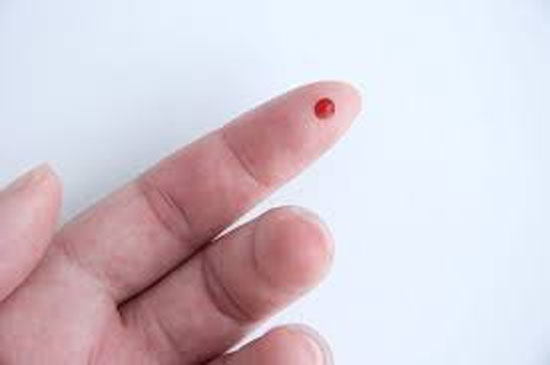
For the study, researchers collected a few drops of blood from participants’ fingertips, dried the samples on cards, and analysed them for proteins associated with Alzheimer’s and other neurological changes. The trial involved 337 participants across seven medical centres in Europe.
Results showed that p-tau217 levels measured from finger-prick samples closely aligned with those obtained from conventional blood tests. The method was also able to detect Alzheimer’s-related changes in spinal fluid with an accuracy of 86 per cent. Two additional biomarkers — GFAP and NfL — were successfully measured as well, showing strong agreement with standard testing methods.
Although the technique is not yet ready for routine clinical use, researchers say it represents a major step forward. The approach could enable remote participation in studies, improve clinical trial recruitment and monitoring, support large-scale population research, and help include communities that currently lack access to advanced healthcare infrastructure.