Daijiworld Media Network - Margao
Margao, Jan 12: The sighting of the Amur Falcon in south Goa has once again drawn attention to the ecological significance of the state’s grasslands and coastal habitats along the migratory route of the globally admired raptor.
The Amur Falcon, named after its breeding grounds in Amurland in southeast Siberia, also breeds in northern China and neighbouring regions. The species is renowned for one of the longest migrations undertaken by any bird of prey, flying thousands of kilometres to south and east Africa during winter, including a perilous non-stop crossing of the Arabian Sea.
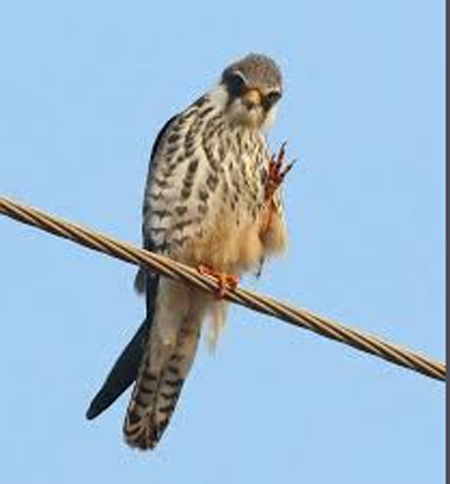
“Like a wonder of nature, dragonflies appear on plateaus just as the raptors arrive. Feeding on them strengthens the birds for their long sea crossing,” said Verna-based birder Justino Rebello, highlighting the delicate link between insects and migratory birds.
Environmentalists recalled the 2012 massacre of thousands of Amur Falcons in Pangti village of Nagaland, where the birds were hunted for food. The incident shocked the global conservation community, but subsequent awareness and conservation efforts transformed Pangti into a model village, earning international praise for protecting the species.
Naturalist Chawla, who spotted the raptor along with Parab, said the Sirlim grasslands and mangroves near the Sal river are rich in biodiversity. “These areas support a variety of grasses, flora and fauna. Raptors, being at the top of the food chain, are indicators of a healthy ecosystem. Their presence shows that the Sirlim–Chinchinim landscape is ecologically robust,” she noted.
Parab pointed out that Goa serves as a crucial stopover along the west coast for migratory raptors such as the Amur Falcon. “Grasslands, open fallow fields adjoining khazans, and lateritic plateaus are vital habitats for avifauna. These areas must be conserved as they provide essential feeding grounds during migration,” he said.
Conservationists stress that protecting these often-overlooked landscapes is key to sustaining migratory species and maintaining ecological balance along India’s western coastline.