Daijiworld Media Network - Washington
Washington, May 5: Donald Trump has claimed that Iran targeted a South Korean cargo vessel and other ships, renewing his call for Seoul to join a US-led effort to secure the vital Strait of Hormuz.
The remarks came as the United States launched “Project Freedom,” a military operation aimed at guiding commercial vessels stranded due to the ongoing US-Israel conflict with Iran through the critical shipping route, which handles a significant share of global oil and commodity flows.
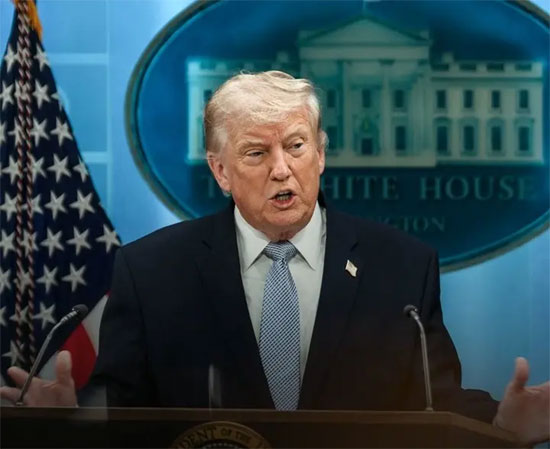
In a post on Truth Social, Trump alleged that Iran had fired at vessels linked to neutral countries, including a South Korean cargo ship. “Perhaps it’s time for South Korea to come and join the mission,” he said, adding that US forces had already engaged and neutralised several Iranian “fast boats.”
The statement followed reports from South Korea’s foreign ministry about an explosion aboard a Panama-flagged vessel operated by HMM Co. in the Strait of Hormuz. The ship, anchored near the United Arab Emirates, carried 24 crew members, including six South Koreans. No casualties were reported, and the cause of the blast remains under investigation.
Amid escalating tensions, Trump issued a stark warning that any Iranian attack on US vessels would be met with overwhelming force. At the same time, he indicated that diplomatic talks with Iran could still be possible, describing its negotiators as “more malleable.”
The renewed call for South Korea’s involvement adds pressure on the energy-dependent nation, which relies heavily on the Strait for imports. The narrow passage accounts for roughly one-fifth of the world’s oil supply.
The US military operation is being led by United States Central Command, which confirmed that American forces have already destroyed several Iranian boats and intercepted missiles and drones since the mission began. The operation includes deployment of guided-missile destroyers, over 100 aircraft, unmanned systems, and around 15,000 personnel.
According to officials, “Project Freedom” focuses on ensuring safe passage for commercial vessels by offering navigation guidance and maintaining readiness to respond to potential threats, rather than providing full naval escorts.
Despite these efforts, the escalation has cast doubt on the stability of an already fragile ceasefire between the US and Iran, raising concerns over prolonged disruption in one of the world’s most critical maritime corridors.