Daijiworld Media Network - New Delhi
New Delhi, May 16: The Supreme Court on Friday ruled that compensation awarded to motor accident victims under the Motor Vehicles Act (MVA) cannot be reduced merely because the claimant has already received reimbursement through a Mediclaim or health insurance policy.
A bench comprising Justices Sanjay Karol and Vipul M. Pancholi dismissed an appeal filed by New India Assurance Company Limited against a Bombay High Court judgment that had refused to deduct Mediclaim reimbursements from compensation payable in a motor accident case.
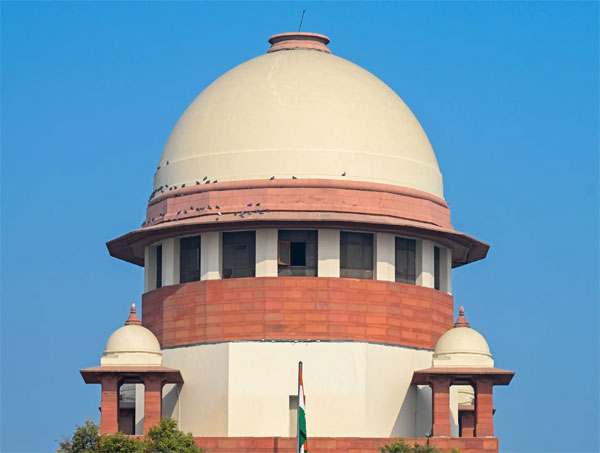
Upholding the High Court’s view, the apex court observed that benefits received under a Mediclaim policy arise from a separate contractual arrangement based on premiums paid by the insured over several years, and therefore cannot diminish a claimant’s statutory right to “just compensation” under the Motor Vehicles Act.
“In fine, we hold that the amount received as part of Mediclaim/medical insurance is not deductible from compensation as calculated by the concerned Tribunal,” the bench stated in its judgment.
The court drew a clear distinction between compensation awarded under the Motor Vehicles Act and payments made under a health insurance policy. It explained that compensation under the MVA is a statutory entitlement arising from a motor accident, whereas Mediclaim benefits stem from a private insurance contract between the policyholder and insurer.
“One is statutory while the other is contractual,” the bench noted, adding that insurance payouts are linked to premiums paid by individuals over time and are independent of accident compensation claims.
The case arose amid conflicting decisions by different High Courts on whether claimants could receive compensation under both heads without resulting in what insurers termed a “double benefit”.
The insurance company argued that if medical expenses had already been reimbursed under a Mediclaim policy, granting the same amount again under the Motor Vehicles Act would amount to duplication and unjust enrichment.
Rejecting this argument, the Supreme Court said that such an interpretation would unfairly penalise individuals who had responsibly secured health insurance coverage by paying premiums over many years.
The court observed that Mediclaim policies are purchased as financial protection against unforeseen medical emergencies, especially at a time when healthcare expenses are rising sharply.
“It would also amount to an unjust benefit to the insurer of the offending vehicle if they are not required to compensate under one of the heads of medical expenses solely on account of the fact that the claimant had received the benefit of a policy for which they had been paying premiums for years,” the judgment said.
The bench clarified that the legal principle against “double benefit” applies only when two separate payments compensate for the same loss from the same legal source. In this case, the court said, Mediclaim benefits and motor accident compensation operate in entirely different legal spheres.
Explaining the distinction further, the court stated that statutory benefits derive from the authority of law, while contractual benefits arise from agreements voluntarily entered into between parties.
The apex court also referred to earlier judgments to reiterate that benefits such as provident fund, pension and insurance proceeds are generally not deductible from compensation unless they are directly linked to the accident claim itself.
In a significant observation, the Supreme Court expressed concern over inconsistent rulings delivered by different High Courts and even coordinate benches within the same court on similar legal issues.
The bench warned that such inconsistencies create uncertainty in the justice system and emphasised the responsibility of both judges and lawyers in maintaining consistency in judicial precedents.
“It is this duty towards the court which requires them to bring to the court’s notice judgments both that aid their case and also those that do not,” the court observed while referring to the obligations of legal practitioners.
The matter has now been sent back to the Bombay High Court for fresh consideration in line with the principles laid down by the Supreme Court.