Daijiworld Media Network – New Delhi
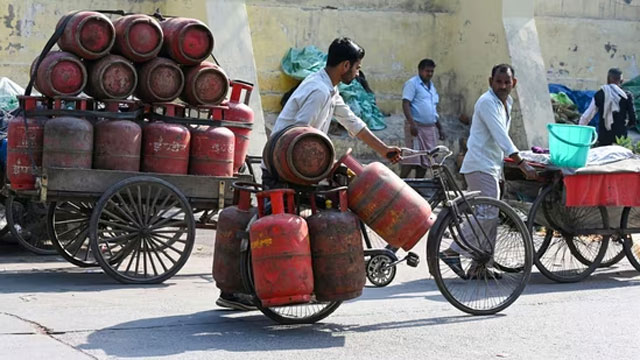
New Delhi, Jun 7: Domestic cooking gas prices across the country have been increased by Rs 29 per cylinder starting today. This marks the second price revision in three months as state-owned oil marketing companies grapple with surging global energy costs amid the ongoing conflict in West Asia.
With this latest increase, the price of a 14.2-kg domestic LPG cylinder in Delhi has reached Rs 942, up from Rs 913. This follows a previous hike of Rs 60 on March 7, which was triggered by international fuel price spikes following supply chain disruptions in the Gulf.
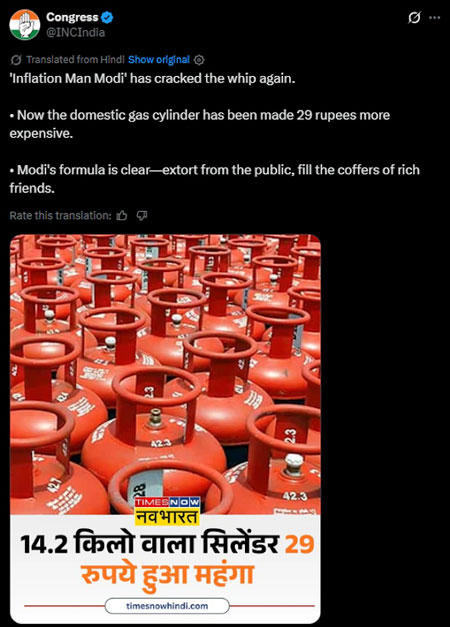
The price hike has reignited political debates over inflation. The Congress party accused the central government of burdening households already struggling with the rising cost of living, while the Centre maintained that consumers are still largely shielded from the full brunt of the global energy shock.
Congress mounts attack
Shortly after the announcement, the Congress launched a scathing critique of the government. In a post on X, the party stated, "'Inflation Man Modi' has cracked the whip again. Now the domestic gas cylinder has been made Rs 29 more expensive. Modi's formula is clear, extort from the public, fill the coffers of rich friends."
Punjab Congress chief Amarinder Singh Raja Warring also condemned the hike, noting that the cost of an LPG cylinder is inching closer to the Rs 1,000 mark. He questioned whether these were the 'achhe din' promised by the government, highlighting the immense financial strain on ordinary families.
Centre defends price revision Responding to the opposition's backlash, the government stated that Indian citizens still enjoy some of the lowest cooking gas rates globally, despite the steep surge in international LPG prices. According to the petroleum ministry, the actual cost of supplying a 14.2-kg cylinder currently exceeds Rs 1,600.
The government clarified that beneficiaries of the Pradhan Mantri Ujjwala Yojana (PMUY) will continue to receive a direct benefit transfer of Rs 300 on their first four annual refills, bringing their effective cost down to Rs 642 per cylinder. The ministry highlighted that even non-PMUY households are paying approximately Rs 700 less than the market-linked cost.
Global factors driving the hike
The government directly attributed the price increase to disruptions in West Asia, particularly around the Strait of Hormuz, which have severely tightened global supplies. India imports over 60 percent of its LPG, and the costs are tightly bound to the Saudi Contract Price. Government data shows this benchmark surged from $522 per tonne in January to $775 per tonne in April, a near 50 percent jump.
Massive losses for oil marketing companies
The recent Rs 29 hike only partially offsets the heavy financial burden borne by state-owned fuel retailers. Official estimates indicate that oil marketing companies are absorbing losses of Rs 600 to Rs 700 on every domestic cylinder sold.
The petroleum ministry projects the under-recovery on domestic LPG to swell to around Rs 60,000 crore in 2025-26, a sharp increase from Rs 41,338 crore in the previous financial year. To help mitigate this, the union cabinet recently approved a compensation package of Rs 30,000 crore for these companies.
Broader fuel price pressures
The LPG hike coincides with broader increases across the energy sector. Since mid-May, petrol and diesel prices have cumulatively risen by Rs 7.50 per litre, and CNG prices have climbed by about Rs 6 per kg. Despite these recent hikes, industry estimates show that oil companies continue to face losses of roughly Rs 11 per litre on petrol and Rs 33.6 per litre on diesel as the government continues its attempt to shield citizens from the full impact of international energy rates.