Daijiworld Media Network - Beirut
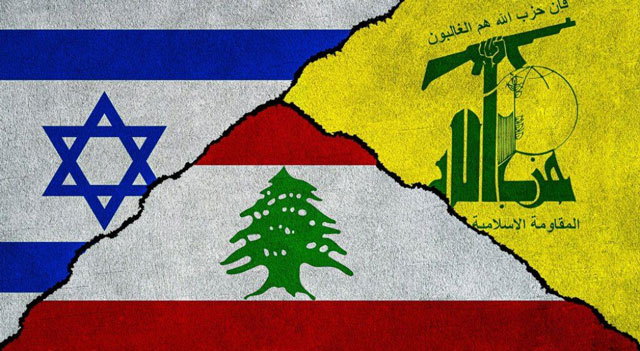
Beirut, Jun 20: Israel and the Iranian-backed Hezbollah militant group have agreed to halt heavy fighting in southern Lebanon that had threatened to derail an interim agreement between the United States and Iran aimed at ending their wider conflict, officials said on Friday.
The truce came after intense exchanges of fire killed 47 people in Lebanon and four Israeli soldiers. Neither Israel nor Hezbollah immediately officially confirmed the ceasefire.
The fighting between Israel and Hezbollah began soon after the outbreak of the wider regional conflict, with Hezbollah launching rockets and drones towards northern Israel, while Israeli forces carried out operations and seized areas in southern Lebanon.
The interim US-Iran agreement has already led to the reopening of the Strait of Hormuz, which Iran had effectively blocked, disrupting global oil and natural gas supplies. The deal also aims to restart negotiations over Iran’s nuclear programme, which was a key issue behind the conflict involving Israel and the United States.
However, the agreement faced fresh challenges due to the Lebanon front. Talks scheduled in Switzerland were delayed as the fighting continued. The agreement calls for an end to military operations in Lebanon and respect for its sovereignty, though neither Israel nor Hezbollah are direct parties to the deal.
Israeli Prime Minister Benjamin Netanyahu has said Israeli forces will remain in southern Lebanon until threats are removed, while Hezbollah has insisted that Israel must withdraw from Lebanon before stopping attacks.
Despite reports of the ceasefire effort, Israeli artillery fire was still heard near the Lebanese border, and an explosion was reported inside Lebanon, according to an Associated Press journalist.
The ceasefire attempt was reportedly mediated by Qatar, the United States and Iran. Regional and US officials said fighting was expected to stop at 4 pm local time, though they spoke on condition of anonymity.
A Hezbollah official said an announcement on ending hostilities could come soon but stopped short of confirming that the agreement was already active.
Netanyahu’s office did not immediately comment, but the Israeli prime minister said on social media that Israeli forces had carried out strikes on 150 Hezbollah targets, killing dozens of militants.
Israeli military spokesman Brigadier General Effie Defrin said there were no new government instructions and that Israeli forces would continue operating in a forward defence zone.
Israel’s ambassador to the US, Yechiel Leiter, said Israel remained committed to an immediate ceasefire if Hezbollah respected the agreement and stopped attacks.
Meanwhile, Iranian officials cancelled their planned visit to Switzerland, saying the fighting in Lebanon needed to end before negotiations could proceed. US Vice President JD Vance also postponed his visit.
Iranian Foreign Ministry spokesperson Esmaeil Baghaei said discussions through mediators were continuing on the next phase of negotiations to prepare a final agreement.
The Israeli military said four soldiers, including a lieutenant colonel, were killed when a tank was attacked near Nabatiyeh in southern Lebanon. Another five soldiers were injured in a drone strike.
Israel later launched strikes on what it described as Hezbollah infrastructure sites in Nabatiyeh and other areas, accusing the group of violating the ceasefire.
Hezbollah claimed its attacks were in response to Israeli violations and said it targeted Israeli tanks after Israeli forces attempted to advance towards the strategic Ali al-Taher hilltop overlooking Nabatiyeh.
The violence forced many residents in southern Lebanon to flee their villages.
“The situation is lawless, we couldn’t stay,” said Mustafa Zain, who fled with his six daughters in a pickup truck.
The conflict has also created tensions between Israel and the United States, with US President Donald Trump becoming increasingly critical of Netanyahu’s government.
The upcoming negotiations are expected to focus on Iran’s nuclear programme. Tehran maintains that its nuclear activities are peaceful, though international monitors have raised concerns over its enriched uranium stockpile.
The interim agreement gives negotiators 60 days to reach a broader nuclear deal, with the possibility of an extension. It includes incentives such as the lifting of international sanctions and a proposed $300 billion fund for Iran’s post-war reconstruction.
Following the interim agreement, the US has lifted restrictions on Iran’s ports and allowed greater freedom for oil sales, while discussions are underway regarding the release of frozen Iranian assets.