Daijiworld Media Network - Beirut
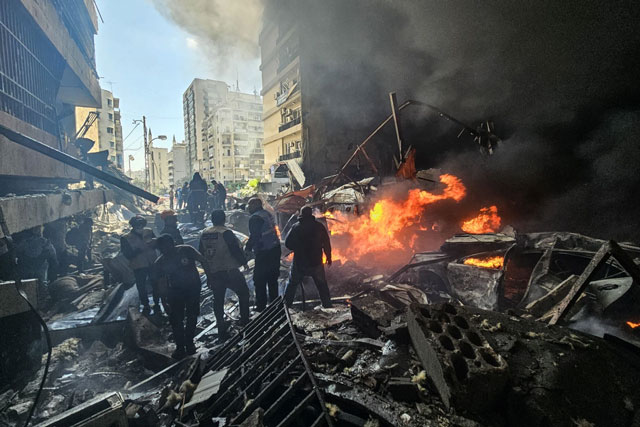
Beirut, Jun 20: At least 47 people have been killed in Lebanon following a series of Israeli air strikes, while four Israeli soldiers were also killed, as Israel and the Iran-backed Hezbollah group agreed to a ceasefire on Friday, officials said.
Lebanon’s Health Ministry said 97 others were injured in the Israeli strikes, which targeted several areas across the country.
The Israeli Defence Forces (IDF) said it had carried out attacks on 80 Hezbollah-linked targets and killed “dozens” of the group’s members.
The strikes came a day after the United States and Iran reached a deal aimed at ending the wider Middle East conflict, including a permanent halt to hostilities in Lebanon.
Both Israel and Hezbollah continued attacks after the announcement of the deal, but a US official later confirmed that an immediate ceasefire between the two sides had been agreed on Friday afternoon. The IDF also confirmed that the ceasefire was in effect.
Before the ceasefire announcement, Israel had said it had no plans to withdraw its forces from Lebanon and maintained that its conflict with Hezbollah was separate from the war involving Iran.
In southern Lebanon’s Nabatieh district, nine people were killed in Harouf, seven in Haboush and six in al-Duweir, including a child, according to the health ministry. Lebanon’s state news agency described the overnight Israeli bombardment in Nabatieh as among the most intense attacks since the conflict began.
Hezbollah claimed it had ambushed Israeli forces in southern Lebanon, destroying three tanks with guided missiles and targeting troops with rocket and artillery fire.
Israeli Prime Minister Benjamin Netanyahu expressed condolences over the deaths of the four Israeli soldiers and said he had directed the military to “strike Hezbollah with full force”.
“My directive is clear: Israel will not tolerate attacks on our soldiers or our territory, and it will exact a very heavy price from Hezbollah for these attacks,” Netanyahu said.
Lebanese President Joseph Aoun described the expansion of Israeli attacks as a “dangerous escalation” but said efforts for a comprehensive ceasefire would continue.
The conflict expanded into Lebanon after Hezbollah launched attacks against Israel following the beginning of the wider war involving Israel, the US and Iran. Israel responded with a bombing campaign across Lebanon and deployed forces into parts of the south.
According to Lebanon’s Health Ministry, more than 3,900 people, including women and children, have been killed and over 11,600 injured since the latest conflict began. Around one million people remain displaced, with several communities in southern Lebanon severely damaged.
Hezbollah had earlier vowed to continue attacks as long as Israeli forces remained in Lebanese territory.
Meanwhile, the ceasefire agreement has created political tensions within Israel, with far-right leaders opposing the deal. National Security Minister Itamar Ben-Gvir criticised the agreement after the deaths of Israeli soldiers.
French Foreign Minister Jean-Noël Barrot urged Israel to respect the US-Iran agreement and called on Washington to put pressure on the Israeli government.
The US-Iran deal includes provisions related to Iran’s nuclear programme, sanctions relief and a commitment to pursue a final settlement within 60 days, which can be extended with mutual consent.
Talks scheduled in Switzerland were delayed after US Vice-President JD Vance cancelled his planned visit. Vance had earlier criticised members of Netanyahu’s government who opposed the agreement.
US officials said Lebanon was included under the ceasefire framework but clarified that the withdrawal of Israeli forces from Lebanese territory was not a condition of the agreement and that Israel retained the right to self-defence.