Daijiworld Media Network – Panaji
Panaji, Jul 15: An eight-day break in monsoon rainfall has sparked concern among farmers in Goa's agriculture-dependent Sattari taluka, with fears mounting over the fate of paddy fields, newly planted cashew and mango grafts, flowers and seasonal crops.
Following an encouraging start to the monsoon, farmers had begun preparing paddy fields, planting cashew and mango grafts, and cultivating marigold flowers, traditional vegetables, yams, ginger, turmeric and other seasonal crops. However, the prolonged dry spell has disrupted farming activities, raising concerns that newly planted saplings may not survive due to inadequate soil moisture.
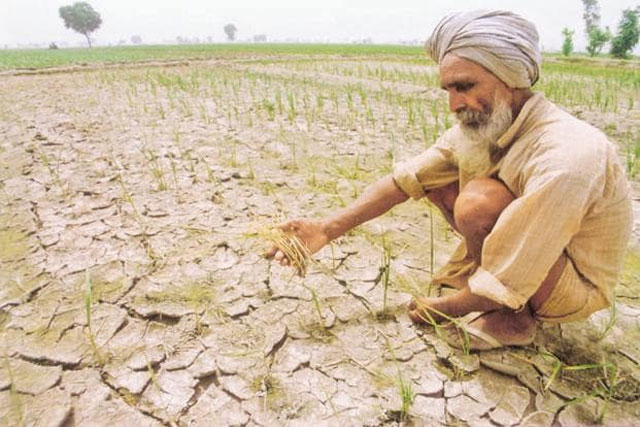
Sattari, one of Goa's major agricultural regions, relies almost entirely on monsoon rains for cultivation. With the onset of the kharif season, farmers across the taluka begin large-scale cultivation of paddy, cashew, mango, arecanut, ginger, turmeric, marigold flowers and various indigenous vegetables.
Continuous soil moisture is essential for paddy cultivation, but the absence of rainfall has caused several prepared paddy fields to begin drying out. Farmers who have already raised seedbeds or are ready for transplantation are now facing uncertainty.
Yogesh Desai, a young farmer from Guleli in Sattari, said he had completed land preparation for yams, marigold flowers and traditional vegetables, while planting had already started in some areas.
"But the absence of rain for the past eight days has become a major concern. Soil moisture is decreasing rapidly, and we fear that all our hard work and investment may go to waste. Many farmers in Sattari depend on traditional vegetable cultivation for their livelihood. If rain does not return within the next few days, crop production will be severely affected," Desai said.
The dry spell has also affected the region's extensive cashew and mango plantations located in hilly and forest-fringe areas, where cultivation depends entirely on rainfall due to the absence of irrigation facilities.
Newly planted grafts require consistent moisture during the initial weeks to develop healthy root systems. With rainfall coming to a halt, soil moisture levels have dropped considerably, increasing the risk of saplings drying up. Farmers without alternative water sources are particularly worried as their investments remain dependent on timely rains.
Monsoon is also the season for cultivating marigold flowers and traditional vegetables such as ridge gourd, bitter gourd, pumpkin, chillies, brinjal and several other crops. While many farmers have completed land preparation, others have already begun sowing.
The lack of rainfall has affected seed germination and early crop establishment. Farmers fear that if the rains do not return within the next four to five days, their investment of labour and money could be lost. Marigold flowers are in high demand during festivals such as Ganesh Chaturthi, Navratri, Dussehra and Diwali, and any disruption in cultivation could affect supplies during the festive season.
The dry spell has also posed challenges for the Agriculture Department. Although farmers were advised to complete sowing and plantation activities on time, the absence of rainfall has stalled several agricultural operations.
Agricultural experts said the kharif season is expected to regain momentum only after normal rainfall resumes. They also warned that increasingly erratic weather patterns, irregular rainfall and prolonged dry spells are emerging as major challenges for agriculture and could have long-term implications for crop productivity. If the dry conditions continue for a few more days, they cautioned, the planning and progress of the current kharif season could be significantly affected.