Daijiworld Media Network - Washington
Washington, Aug 9: US Immigration and Customs Enforcement (ICE) is expected to complete the rollout of body-worn cameras to all its officers and agents working in the field by the end of August, Acting Director David Venturella said, bringing forward the agency’s timeline for nationwide deployment.
Venturella said ICE was on track to equip every field officer and agent with a body-worn camera by the end of August. The move comes amid growing scrutiny of immigration enforcement operations and calls for greater transparency and accountability.
The expansion follows a series of fatal shootings involving immigration officers that were not captured on body cameras. Two fatal shootings last month, in Maine and Texas, intensified questions over why ICE officers involved in such incidents were not equipped with cameras.
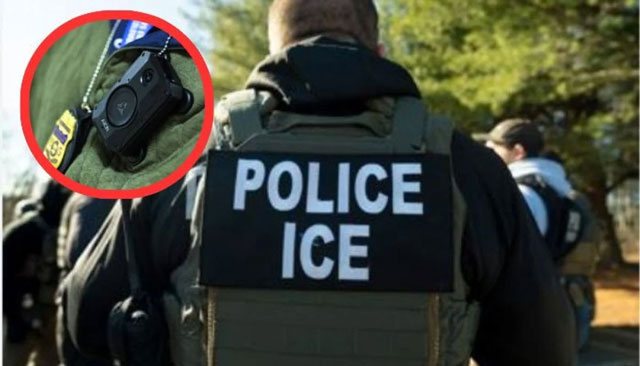
The issue has also gained attention following earlier shootings of US citizens during immigration enforcement operations in Minnesota. Then-Homeland Security Secretary Kristi Noem had said ICE's body-camera programme would be expanded nationwide as funding became available.
ICE's move comes after Congress provided additional funding for body cameras. The agency spent $30.9 million in July to purchase camera equipment from Axon, according to federal spending records cited by AP. Congress had separately allocated $20 million for ICE body cameras in legislation passed in April.
The body-camera programme, however, has taken years to reach nationwide implementation. ICE began testing body cameras in 2021 and had distributed about 1,400 devices by 2024. In March, former ICE Director Todd Lyons told Congress that around 3,000 of approximately 13,000 field agents had active body cameras, with additional cameras being deployed.
The agency's existing policy requires officers to activate cameras during enforcement activities, including arrests, execution of search warrants and responses to emergencies. ICE's formal body-camera directive says the technology is intended to document interactions with the public and promote officer and public safety, accountability and transparency.
At least one member of every ICE arrest team will be required to have a body camera. Border czar Tom Homan had earlier said officers would be required to record vehicle stops with at least one body camera, amid increased scrutiny of immigration enforcement activities.
However, questions remain over how much of the recorded footage will ultimately be made public. ICE's policy gives agency leadership discretion over the release of footage in cases involving serious injury or death. A committee comprising senior ICE officials and lawyers reviews such footage and can recommend whether it should be released.
Under the policy, footage may be released within 72 hours following a serious incident if officials determine that doing so is appropriate. However, the ICE director can withhold or indefinitely delay release when there are specific and compelling circumstances, including concerns that disclosure could interfere with an investigation or violate privacy.
Venturella defended the policy, saying restrictions on releasing footage are intended to protect investigations and individual privacy and are consistent with federal law and practices followed by other federal law-enforcement agencies. He also rejected criticism that the policy prevents transparency, saying ICE remains committed to accountability.
The policy also requires identifying features of ICE officers, including their faces, names and badge numbers, to be redacted when footage is released in order to protect their privacy.
The rollout is being closely watched because ICE's sister agency, Customs and Border Protection (CBP), has also faced criticism over the release of body-camera footage. CBP has not released footage of the January shooting of Alex Pretti in Minneapolis, saying the material remains part of an investigation and would be made public when appropriate.
The latest announcement marks a significant acceleration from earlier timelines. AP reported that ICE had previously indicated that cameras would be issued by mid-September, while some lawmakers had been told deployment could be completed by the end of August.
With the nationwide rollout now expected by August-end, body cameras are set to become a routine part of ICE's immigration enforcement operations. The effectiveness of the programme in improving public accountability, however, is likely to depend not only on whether officers record their encounters but also on how consistently the footage is preserved and made available for public scrutiny.