Daijiworld Media Network - Toronto
Toronto, Sep 15: Canadian authorities have deported four Indian-origin nationals from Punjab over their alleged links to extortion and organised criminal activities, as Canada steps up action against foreign nationals considered inadmissible under its immigration laws.
The Canada Border Services Agency (CBSA) said the four individuals were found inadmissible under the Immigration and Refugee Protection Act (IRPA) because of links to criminal organisations, serious criminality or involvement in a pattern of criminal activity.
The individuals were identified as Palwinder Singh, Jasmer Singh, Amitoz Bajwa and Sahibjot Singh.
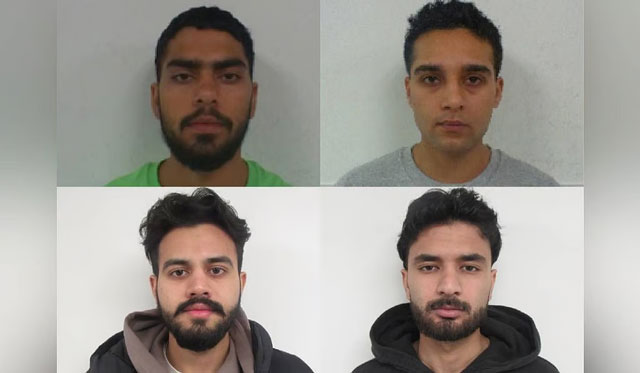
According to the CBSA, Palwinder Singh, a foreign national linked to an extortion-related shooting in the fall of 2025, was removed from Canada after the Immigration and Refugee Board of Canada (IRB) found him inadmissible for membership in a criminal organisation linked to extortion-related violence.
Jasmer Singh, who was convicted in Canada of forcible confinement, was found inadmissible for serious criminality under the IRPA. He was issued a deportation order and subsequently removed from the country.
Amitoz Bajwa was removed after the IRB found him inadmissible for being a member of an organisation engaged in a pattern of criminal activity. The CBSA said he was also linked to firearms-related activity and an extortion-related shooting.
Sahibjot Singh was found inadmissible after being linked to an organisation engaged in a pattern of criminal activity. According to the CBSA, Singh acknowledged committing offences that formed part of the organisation's pattern of criminal activity and was subsequently removed from Canada.
The CBSA said it continues to work with law enforcement agencies across Canada to identify, investigate and remove foreign nationals who are inadmissible under the IRPA and are suspected of involvement in extortion and organised criminal activities.
The agency began dedicating additional resources to cases potentially linked to extortion in the Pacific and Prairie regions in August 2025 and expanded the initiative to the Greater Toronto Area in November 2025.
As of September 3, 188 removal orders had been issued this year on various inadmissibility grounds, while 111 individuals had been removed from Canada. Of these, 91 removal orders were issued in the Pacific Region, with 58 individuals removed. The Prairie Region recorded 47 removal orders and 30 removals, while the Greater Toronto Area recorded 50 removal orders and 23 removals.
Canada's Public Safety Minister Gary Anandasangaree said extortion and organised crime pose a threat to communities and that the government was committed to disrupting such activities through cooperation with law enforcement agencies and decisive enforcement action.
CBSA President Erin O’Gorman said the removal of more than 100 individuals linked to extortion activities demonstrated the agency's sustained efforts to identify and take action against people who pose a threat to public safety.
The CBSA said its investigations draw on information provided by law enforcement partners, government agencies, its own investigations and members of the public. The agency gives priority to cases involving criminality, organised crime and individuals considered a risk to public safety.
The agency removed 23,160 inadmissible persons from Canada last year, including 1,010 people who were subject to serious inadmissibility findings involving areas such as national security, war crimes or human rights violations, organised crime and criminality.
The CBSA said it is currently removing approximately 400 inadmissible individuals every week.
Under Canada's Border Plan, USD 30.4 million was allocated to strengthen CBSA's capacity to complete 20,000 removals annually during the previous fiscal year and 2026-27. The government has also announced plans to hire 1,000 additional CBSA officers under the Border Plan and Budget 2025 to strengthen border security.
The latest deportations come amid growing concern in Canada over extortion targeting members of the South Asian community. Canadian police have previously released photographs of 15 men charged in connection with a series of extortion investigations. The Calgary Police Service said 16 people had been charged with a combined 56 offences, with one remaining in custody while the others had been released on bail.
The Financial Transactions and Reports Analysis Centre of Canada (FINTRAC) has also warned about the use of young foreign nationals in organised extortion operations.
In a recent special bulletin, FINTRAC said financially vulnerable young male Indian nationals in Canada on study permits were being used by gangs as foot soldiers to carry out targeted acts of violence against South Asian diaspora communities.
The financial intelligence agency's analysis indicated that multiple criminal groups may be involved in continuing extortion activities, including the Bishnoi and Bambiha gangs. It also flagged the possibility of “copycat” actors using the names or reputations associated with established criminal groups to increase the impact of their threats.
The CBSA said its ongoing enforcement efforts form part of a coordinated nationwide response to extortion and organised crime, with the agency working alongside police and other partners to investigate foreign nationals who may be violating Canada's immigration laws.