Daijiworld Media Network - New Delhi
New Delhi, Sep 21: Delhi could become the world's 14th-largest city economy by 2050, with its economic output projected to cross USD 2 trillion, according to the Oxford Economics Global Cities Index 2026.
Delhi is currently the world's 63rd-largest city economy, but Oxford Economics expects it to climb 49 places by 2050. The national capital is also India's highest-ranked city in the overall index, placed 268th globally, five places higher than its position a year earlier.
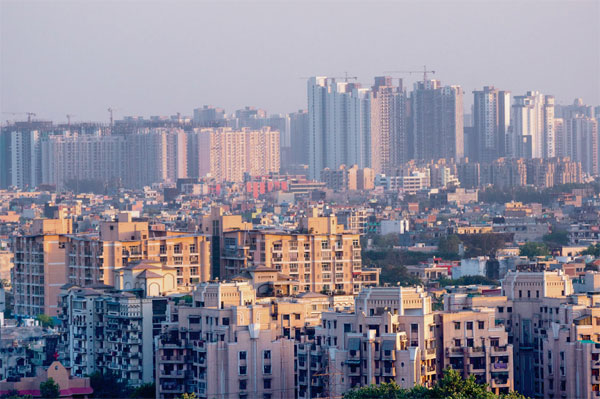
The report places Delhi's long-term prospects within a broader shift in the global urban economy towards Asia. Oxford Economics said Chinese and Indian cities are expected to be at the forefront of global urban growth, supported by large populations and gains in productivity and income.
Delhi, Shanghai and Beijing are currently outside the overall top 100, but Oxford Economics expects them to record some of the largest increases in GDP through 2050. The organisation said the Chinese and Indian share of GDP among major global cities is expected to exceed that of Europe by 2050.
Delhi's strongest performance in the 2026 index is in the Human Capital category, where it ranks 13th globally. Its assessment places the capital ahead of cities including Toronto, Seoul and Beijing on this measure.
Oxford Economics attributed Delhi's longer-term potential to its talent pipeline and corporate depth, which it said are characteristics associated with much higher-ranked global cities. However, the report also highlighted air quality and income inequality as significant challenges for the capital.
The Global Cities Index does not measure economic size alone. It assesses 1,000 cities across five categories — Economics, Human Capital, Quality of Life, Environment and Governance. The Economics category considers factors including GDP size, GDP growth, economic stability, GDP per capita, employment growth and economic diversity.
India has emerged as one of the major centres of urban growth in the 2026 index, with 55 Indian cities featuring among the world's top 100 growth leaders and 23 among the top 50.
Oxford Economics said India's urban expansion stands out because it is not restricted to the country's largest metropolitan centres. Strong GDP trajectories, expanding labour pools, corporate networks and university ecosystems are among the factors supporting the growth of Indian cities.
Bengaluru has been highlighted by Oxford Economics as one of its global “Cities to Watch”. The technology hub climbed 20 places to 311th in the overall index, recording the biggest improvement among India's six largest metropolitan cities.
Oxford Economics expects Bengaluru's real GDP to expand at an average annual rate of 9.2 per cent between 2026 and 2030, putting the city among the world's fastest-growing urban economies on this measure.
The report points to Bengaluru's large pool of young and skilled graduates, its universities and established technology sector as key factors supporting its expansion. Its growing role as a technology research and development centre, including in areas linked to artificial intelligence, could further support productivity and wage growth.
Mumbai ranks 330th globally in the overall index and is India's leading city for corporate headquarters, ranking 23rd globally on that measure.
Oxford Economics projects that Mumbai, currently the world's 99th-largest city economy, could rise to 36th-largest by 2050. The projection underlines the continued importance of India's financial capital even as urban growth becomes more widely distributed across cities and regions.
Chennai ranks 381st globally, followed by Hyderabad at 421st and Pune at 427th. Hyderabad and Chennai also feature prominently in the growth projections, ranking 15th and 16th globally, respectively, for forecast GDP growth.
The report also identifies strong growth prospects beyond India's established metropolitan centres. Amravati ranks seventh globally for growth, while Surat and Tiruchirappalli rank 11th and 13th, respectively.
Several other Indian cities recorded significant improvements in the index. Ranchi climbed 74 places, Prayagraj 70, Lucknow 58 and Visakhapatnam 54 places, according to reporting on the index.
Oxford Economics noted that India's economic growth has not been matched by similar performance across all measures of urban development. Quality of life, environmental conditions and income inequality remain challenges for several Indian cities.
For Delhi, poor air quality has been identified as a significant constraint despite the capital's strong human-capital base and economic potential.
The 2026 index also highlights the wider shift in global economic activity towards Asia. Oxford Economics said Asian cities are increasingly dominating global growth trends, with Indian and Chinese cities expected to account for some of the largest increases in economic output through 2050.