Daijiworld Media Network - Mumbai
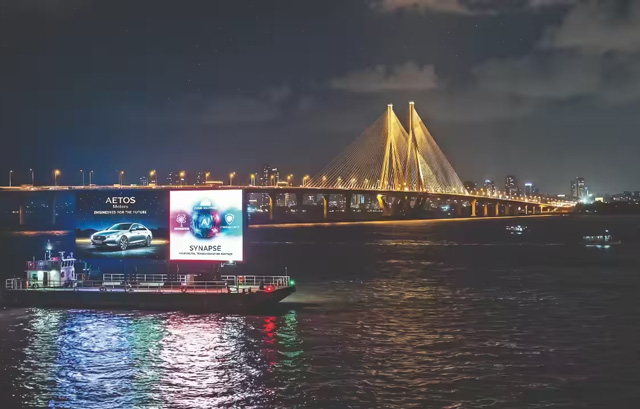
Mumbai, Oct 27: The Maharashtra Maritime Board is planning to introduce shore-based and floating digital billboards at 20 coastal locations in Mumbai, raising concerns among environmental experts over the potential impact of artificial light on marine ecosystems.
The proposed locations include Juhu Beach, Lotus Jetty at Worli and Bandra Sea Link Jetty. The plan could extend commercial advertising into the Arabian Sea, adding to Mumbai’s existing light pollution problem.
Light pollution has emerged as a growing environmental and public health concern. Studies have linked excessive artificial light at night to sleep disturbances, mood disorders and increased risks of obesity and cardiovascular diseases. It can also affect plant growth, animal behaviour and ecological interactions.
Research by the UK-based Plymouth Marine Laboratory and the University of Plymouth found that around 22 per cent of the world’s coastal waters are consistently exposed to artificial light at night from sources such as streetlights, fishing boats and oil rigs.
White and blue-rich LED lighting can penetrate up to 40 metres into the water column, disturbing the biological processes of marine organisms adapted to darkness, said Minu Agarwal, assistant professor at CEPT University and founding member of DarkSky India.
Many zooplankton species remain in deeper waters during daylight and move towards the surface after sunset to feed. This daily migration, one of the largest movements of living organisms on Earth, is guided by natural light patterns.
Artificial illumination can disrupt this movement, affecting feeding patterns, predator avoidance and the transfer of energy through marine food webs, Agarwal explained.
In India, research on marine light pollution has largely focused on the ecological effects of LED fishing, an illegal practice in which artificial lights attract marine organisms towards fishing nets. The practice can disrupt natural migration and feeding patterns.
Artificial lighting also affects Olive Ridley turtles, whose hatchlings can be drawn inland towards urban lights instead of moving towards the sea. A sighting of an Olive Ridley turtle at Juhu Beach last year raised hopes of their return but also highlighted concerns over the loss of traditional nesting habitats to crowded and brightly lit beaches.
Shweta Kulkarni, a dark sky strategist working with the Maharashtra government on a dark sky policy, said India had a responsibility to ensure the safe passage of migratory wildlife as a signatory to the Convention on the Conservation of Migratory Species of Wild Animals.
Guidelines on light pollution affecting migratory wildlife, including marine turtles and seabirds, were endorsed at the convention’s Conference of the Parties held in Gandhinagar in 2020 and formalised in 2024. They recommended a 20-km light-free buffer around important wildlife habitats and called for environmental impact assessments of proposed illuminated sites.
Mumbai’s coastal waters are already exposed to high levels of artificial light. Satellite monitoring shows that nearshore waters in the city exceed the threshold used to distinguish pristine marine habitats, pushing them into zones of chronic light pollution, said Vishal Bhave, assistant director for marine conservation at Srushti Conservation Foundation.
He warned that floating commercial billboards could introduce concentrated, high-intensity light sources directly into sensitive coastal and intertidal areas, disrupting natural marine dark corridors.
Mathi Thumilan, co-founder of Wild and Dark Earth, which works to raise awareness about light pollution and conserve nocturnal habitats, said the impact could be reduced through measures such as using warm-spectrum lighting instead of blue-rich light, limiting brightness and installing timers to gradually dim lights after active hours.
However, he stressed that preventing excessive lighting before it becomes widespread would be the most effective approach.
Billboards generate revenue, he said, warning that allowing a few installations could eventually lead to many more along the coastline, increasing pressure on marine ecosystems.