Daijiworld Media Network - Washington
Washington, Nov 8: The United States has expanded its blockade of Iran by launching a new military task force aimed at disrupting the country's land-based supply routes, stepping up pressure on Tehran amid continuing tensions and stalled negotiations.
The US Central Command (CENTCOM), which oversees American military operations in the Middle East, announced on Saturday the establishment of Task Force Iron Gate to prevent Iran from using ground routes to transport advanced weapons and other materials.
The task force, based in Tampa, Florida, will coordinate with other US government agencies to prevent the movement of advanced weapons systems, dual-use technologies, sanctioned materials and what Washington describes as illegal revenue streams across Iran's land borders and the Caspian Sea.
CENTCOM Commander Admiral Brad Cooper said the initiative would reinforce the US naval blockade against Iran. He added that closer coordination with government agencies would further constrain Tehran's ability to finance terrorism, rebuild weapons factories and replenish its military.
Michael Mulroy, a former US deputy assistant defence secretary for the Middle East, told Al Jazeera that the task force would focus on identifying the routes through which weapons systems and other materials enter Iran and determining how those supply channels could be disrupted. He also pointed to Iran's energy transportation network as an area of interest.
Mulroy said any further escalation ordered by US President Donald Trump could involve attacks on economic and infrastructure targets, aimed at restricting Iran's ability to sustain its military operations and generate revenue.
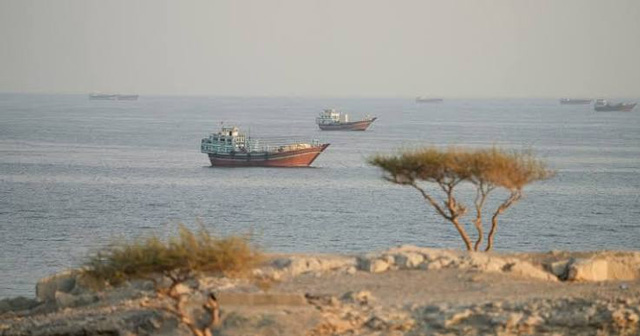
In a separate development, CENTCOM said US forces had disabled a commercial cargo vessel in the Gulf of Oman as part of the naval blockade. A US military aircraft fired precision munitions at the stern of the St Kitts-flagged vessel M/V Huda after its crew allegedly ignored warnings and attempted to violate the blockade. The crew had been directed to leave the targeted areas before the strike.
CENTCOM said enforcement operations since July had resulted in 147 commercial vessels being redirected after complying with orders, while five merchant ships that refused to comply had been disabled.
Meanwhile, Iran's official news agency IRNA reported two explosions on Qeshm Island in the Strait of Hormuz, along with several explosions in the cities of Jask, Sirik and Bandar Abbas on Saturday. Trump had confirmed US strikes on Qeshm Island a day earlier but described them as "minor", saying an Iranian air defence system had been targeted. He also indicated that Tehran remained interested in reaching a deal as Qatar-mediated talks continued.
Adding to tensions, Iran's Islamic Revolutionary Guard Corps (IRGC) Navy claimed that two oil tankers had struck sea mines near the Strait of Hormuz. Iranian state television, citing the navy, said the vessels had entered an unsafe area with their navigation systems switched off, suffered severe damage and stopped after hitting the mines. The circumstances surrounding the reported incidents have not been independently established.
The latest developments come amid an expanding US effort to restrict Iran's maritime and overland trade, particularly the movement of military equipment, sanctioned goods and revenue sources.