Daijiworld Media Network - Bengaluru
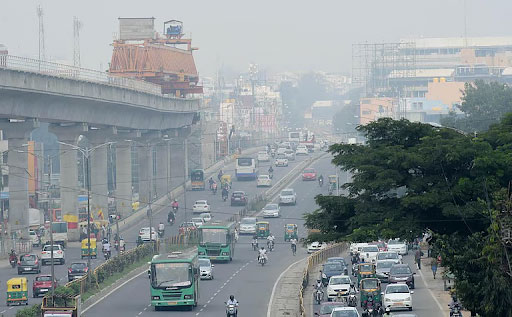
Bengaluru, Jan 9: Air pollution has surged across Karnataka’s major cities, with Bengaluru, Mangaluru, and Mysuru recording unhealthy air quality levels, prompting health experts to issue urgent warnings. Winter weather, dense traffic, and ongoing construction activities are driving the spike, putting residents at risk, particularly those with respiratory conditions.
In Bengaluru, areas such as Hebbal, BTM Layout, and Peenya have reported AQI (Air Quality Index) values exceeding 150, placing them in the 'unhealthy' category. “Road dust and emissions from older vehicles are significantly affecting air quality,” said a health expert.


“People with respiratory issues, children, and senior citizens should limit outdoor activity, especially during peak traffic hours in the mornings and evenings,” the expert added.
Mangaluru, which normally enjoys clean air, has seen AQI rise above 150 due to vehicle emissions, construction dust, and winter conditions. Experts advise residents to avoid early morning walks and wear N95 masks in heavily trafficked zones.
In Mysuru, densely populated areas such as Hebbal and Vivekananda Nagar have also recorded AQI above 150, creating health risks for vulnerable residents. Authorities recommend using air purifiers indoors, planting more greenery, and monitoring AQI updates regularly.
In other cities across the state, air quality conditions vary. Ballari is experiencing moderate air quality, with higher dust levels (PM10) recorded near mining and industrial zones. In Belagavi, the Air Quality Index (AQI) is around 82, and morning fog has been observed, prompting caution for the elderly and children. Meanwhile, Hubballi-Dharwad has AQI levels ranging between 70 and 110, with vehicle emissions along major roads contributing to a slight deterioration in air quality.
The Air Quality Index (AQI) is used to indicate how clean or polluted the air is and the associated health implications. An AQI value between 0 and 50 is considered good. Levels from 51 to 100 fall under the moderate category, while readings between 101 and 150 indicate poor air quality. An AQI ranging from 151 to 200 is classified as unhealthy. Values between 201 and 300 are considered very unhealthy, and AQI levels from 301 to 500 are categorised as hazardous.
Experts warned, “The combination of winter conditions, heavy traffic, and construction dust is a serious public health concern. Vigilance, masks, and protective measures are essential during this peak season.”
Authorities have urged citizens to remain cautious and adhere to safety measures to mitigate the impact of polluted air.