Daijiworld Media Network - New Delhi
New Delhi, Mar 16: India’s merchandise trade deficit declined to $27.1 billion in February, down from $34.68 billion in January, according to data released on Monday by the Ministry of Commerce and Industry.
Official figures showed that merchandise exports in February rose slightly to $36.61 billion, compared with $36.56 billion in January. Meanwhile, imports dropped significantly to $63.71 billion, down from $71.24 billion in the previous month.
For the period April–February of the 2025–26 financial year, India’s merchandise exports reached $402.93 billion, marking a 1.84 percent increase compared with $395.66 billion recorded during the same period in the previous year.
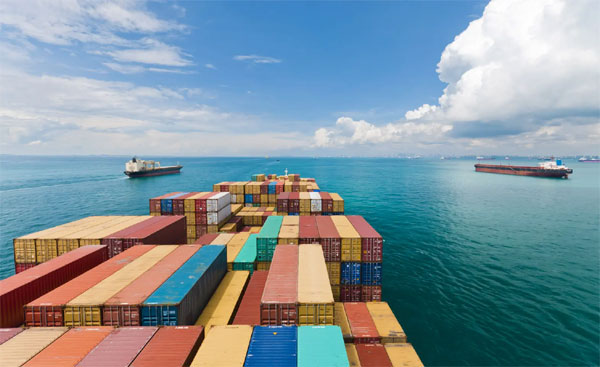
The trade data comes amid growing geopolitical tensions following the escalation of the Iran war, which began on February 28. The conflict has disrupted shipping through the strategically important Strait of Hormuz in the Middle East, a passage that normally handles around 20 percent of global oil and gas exports. The disruption has also affected India’s exports of certain commodities, including rice, to several Middle Eastern countries.
Previously, nearly half of India’s energy imports passed through the Strait of Hormuz. However, the country has diversified its energy sourcing in recent years, with a substantial portion of supplies now coming from Russia.
According to a senior government official, India’s strategic petroleum reserves and diversification of energy imports from around 40 supplier nations have strengthened its ability to handle global energy disruptions. As a result, the current crisis has not triggered an energy shortage in the country.
India is also maintaining direct communication with Iran to facilitate the safe passage of its merchant vessels through the Strait of Hormuz.
An Indian-flagged vessel, Jag Laadki, departed safely from Fujairah on Sunday carrying approximately 80,800 metric tonnes of Murban crude oil and is currently en route to India. The ship and its Indian crew members are safe, according to a statement from the Ministry of Ports, Shipping and Waterways.
Authorities also confirmed that no incidents involving Indian seafarers had been reported in the region in the past 24 hours.
Two Indian-flagged LPG carriers — Shivalik and Nanda Devi — which transported around 92,712 metric tonnes of liquefied petroleum gas, crossed the Strait of Hormuz on Saturday. The vessels are currently heading to India and are expected to arrive at Mundra Port on Monday and Kandla Port on Tuesday.
Officials said that 22 Indian-flagged ships carrying 611 seafarers remain west of the Persian Gulf region at present.
Despite global uncertainties, India’s macroeconomic fundamentals remain stable, supported by strong foreign exchange reserves capable of covering 11–12 months of imports. Officials added that these reserves are also sufficient to meet the country’s oil import requirements for up to five years.
Additionally, India’s strategic stocks of crude oil and petroleum products are adequate to meet more than 70 days of domestic demand, while diversified import sources have significantly reduced the country’s dependence on the Middle East for energy supplies.