Daijiworld Media Network – Beirut
Beirut, Feb 5: A walled housing compound in Lebanon’s northeastern Hermel town, sheltering hundreds of people who fled Syria following the fall of President Bashar Assad over a year ago, has become the centre of controversy amid allegations that its residents are loyalists of the former regime — claims they strongly deny.
The Imam Ali Housing Compound, located close to the Syrian border, houses hundreds of mostly Shiite Muslim families, including Lebanese nationals who had lived for generations in Syrian border villages. The attention surrounding the settlement underscores lingering sensitivities after Syria’s prolonged civil war, with fears of reprisals, identity-based suspicion and concerns among minority communities still running deep.
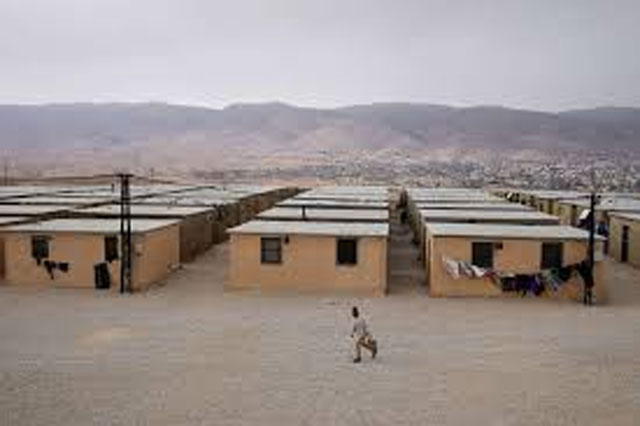
During a visit by The Associated Press, the 228-unit compound was seen adorned with posters of figures allied with the Assad regime, including Iranian religious leaders, military commanders and fallen members of Lebanon’s militant Hezbollah group.
Reports by some media outlets alleging that residents were conspiring against Syria’s new Sunni Islamist-led authorities prompted multiple raids by the Lebanese army. However, the army later announced that no weapons or illegal activities were found during the operations.
Speculation has also surfaced that Hezbollah, which suffered heavy losses during and after its latest conflict with Israel, may be using the compound to recruit fighters. Ghada Ayoub, a lawmaker from the anti-Hezbollah Lebanese Forces Party, said she had formally sought clarification from the government over the construction of the compound in a sensitive border area without state oversight.
“I have yet to receive any response,” Ayoub told the AP, adding that she plans to pursue the matter further.
The Lebanese army reiterated last month that inspections of the compound revealed no unlawful activity.
Among the residents is Syrian national Mohammed Assoura (57), who moved into a modest housing unit with his wife in October after months of displacement. Prior to that, the couple had taken shelter in a mosque and later rented an apartment, exhausting their savings.
“Do I look like a remnant of the regime?” Assoura asked, referring to the term commonly used for Assad loyalists. He said he fled Syria on a motorcycle after receiving warnings from relatives that the Assad government had collapsed, sparking fears of retaliatory attacks against perceived supporters of the former regime and Hezbollah.
Assoura said all he carried into Lebanon was a small bag containing cash and identity documents. He currently depends on assistance from local non-governmental organisations and hopes to return to Syria when conditions stabilise.
Following the collapse of the Assad government in December 2024, Hermel witnessed a sudden influx of refugees. Mayor Ali Taha said nearly 50,000 people crossed into the town within hours, temporarily doubling its population. Many sought refuge in mosques, schools, tents and with relatives before dispersing across Lebanon.
Syria’s civil war, which erupted in 2011, displaced more than five million people. Lebanon hosted around 1.5 million Syrian refugees at its peak. While an estimated 500,000 Syrians have returned home since Assad’s fall, tens of thousands — mainly Shiites and members of the Alawite minority — have recently fled to Lebanon following sectarian clashes and killings.
Syria’s interim President Ahmad al-Sharaa has pledged accountability for sectarian violence, but minority communities remain apprehensive.
Mayor Taha said the housing compound was conceived to accommodate displaced families unable to afford rent, particularly after schools reopened and refugees had to vacate educational facilities. He added that the land belonged to the municipality and that funding came from Shiite religious institutions in Iran and Iraq.
Dismissing allegations of subversive activities, Taha said, “The accusations regarding this facility are politically motivated.”
The United Nations refugee agency said it has no operational presence at the compound and no information about internal activities.
For residents like Syrian widow Maha al-Abeer, who now runs a small grocery store inside the compound to support her children, the housing offers dignity and safety. “Thank God we are sheltered. It’s better than staying in tents and mosques,” she said.
Elderly residents Shayban Midlij (73) and his wife Ihsan (70), who fled their village fearing reprisals due to their Shiite identity, echoed similar sentiments. “We are old people waiting to die peacefully,” she said, rejecting claims of pro-Assad activity within the compound.