Daijiworld Media Network - Washington
Washington, Feb 5: The United States administration is seeking to revive small and community banks, arguing that years of heavy-handed regulation have eroded local lending and slowed broader economic growth, treasury secretary Scott Bessent told lawmakers.
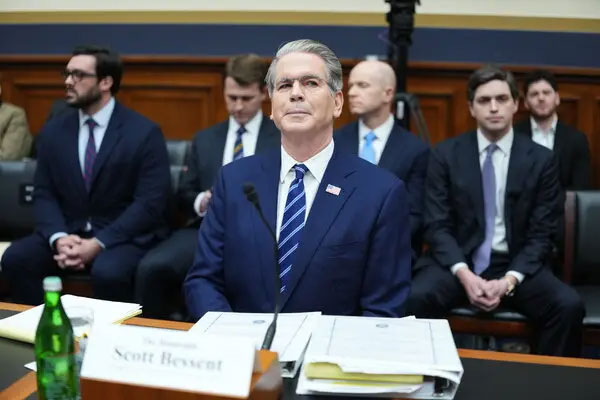
Testifying before the House Financial Services Committee on Wednesday, Bessent said community banks play a vital role in supporting small businesses, farmers, and local housing markets, but have steadily vanished since the global financial crisis.
“More than half of America’s community banks have disappeared since the great financial crisis,” Bessent told the committee, adding that the decline continued well beyond the immediate aftermath of the 2008 collapse.
He attributed the trend to what he described as “one-size-fits-all” regulatory frameworks that failed to distinguish between small local lenders and large, systemically important banks. According to Bessent, regulators often imposed the same compliance standards on community banks as on major financial institutions, driving up costs and restricting lending.
Under earlier regulatory regimes, he said, smaller banks were weighed down by compliance burdens that limited their ability to extend credit. The administration, he added, is now advocating “tailored regulation” that aligns oversight with an institution’s size, complexity, and risk profile.
Republican members of the committee supported the approach, stressing that community banks have deep local knowledge and are essential to financing neighbourhood businesses, agriculture, and housing.
Bessent told lawmakers that community banks account for a significant share of lending in agriculture, small commercial real estate, and local enterprises. He warned that continued consolidation in the banking sector would weaken competition and reduce access to credit outside major financial hubs.
Revitalising local lenders, he said, could help expand housing supply and spread economic growth more evenly across the country. “It’s Main Street’s turn,” Bessent remarked.
Democratic lawmakers, however, raised concerns that easing regulations could heighten financial risks. They cautioned that deregulation in the past had contributed to instability and said strong safeguards were necessary to prevent another financial crisis.
Bessent pushed back against comparisons with the pre-2008 period, arguing that excessive regulation can itself undermine stability by constraining growth and limiting lending capacity.
He said the Financial Stability Oversight Council is working with banking regulators to modernise supervision and cut unnecessary red tape, particularly for small and mid-sized banks.
The administration’s broader push also includes encouraging the creation of new banks, which Bessent noted has become increasingly rare in recent years. Prior to the financial crisis, dozens of new banks were launched annually.
Restoring a diverse banking ecosystem anchored by strong community lenders, Bessent said, would ultimately make the US financial system more competitive and resilient.