Daijiworld Media Network – Jammu
Jammu, Feb 17: With summer approaching, Pakistan’s water concerns are set to intensify as India moves to regulate excess flow from the Ravi River following the completion of the Shahpur Kandi barrage by March 31.
Jammu and Kashmir minister Javed Ahmed Rana announced that surplus water from the Ravi, which previously flowed downstream into Pakistan due to inadequate storage infrastructure on the Indian side, would now be utilised domestically. He said the project aims to provide irrigation benefits to drought-prone Kathua and Samba districts.
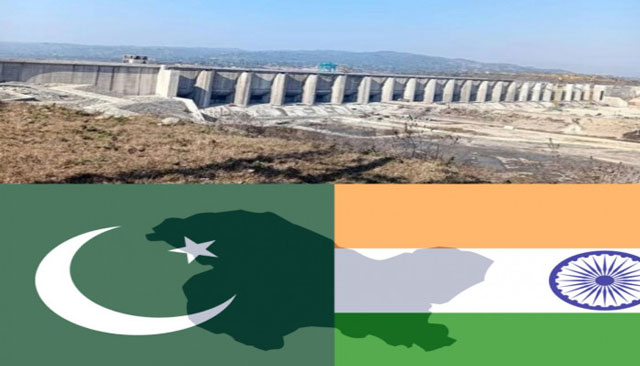
“Excess water to Pakistan will be stopped. It has to be stopped,” Rana said, adding that the move was in India’s interest.
Treaty provisions and river rights
The development comes amid heightened tensions following India’s suspension of the Indus Waters Treaty after last year’s Pahalgam terror attack.
Under the 1960 treaty, brokered by the World Bank, India has unrestricted rights over the three eastern rivers — Ravi, Beas and Sutlej — while Pakistan controls the western rivers — Indus, Jhelum and Chenab. Despite this, surplus waters from the Ravi had continued to flow into Pakistan for decades due to incomplete infrastructure projects on the Indian side.
Union Water Resources Minister C. R. Patil recently said that waters flowing towards Pakistan would be stopped and used in India’s interest.
Long-pending project
The Shahpur Kandi barrage is a downstream component of the Ranjit Sagar Dam project on the Ravi River. Conceived in 1979, the foundation stone was laid by former Prime Minister Indira Gandhi in 1982, with an initial completion deadline of 1988.
While the Ranjit Sagar Dam was completed in 2001, work on the Shahpur Kandi barrage remained stalled for decades due to disputes between Punjab and Jammu and Kashmir. The project was declared a national project in 2008 and construction resumed in phases, receiving a major push in 2018 after intervention by the Narendra Modi government.
The barrage is now expected to be completed by March 31, 2026. From April, it is projected to irrigate over 32,000 hectares of land, with additional agricultural benefits in Punjab.
Broader water strategy
India has also accelerated hydropower projects on the Chenab River and plans to resume work on the Wular barrage on the Jhelum River, aimed at enhancing water storage and regulation capacity within treaty provisions.
Pakistan, whose agriculture sector heavily depends on the Indus river system, has raised concerns internationally and approached arbitration forums, alleging “weaponisation of water”. India, however, has rejected such claims and maintains that its projects fall within its treaty rights over the eastern rivers.
The completion of the Shahpur Kandi barrage marks a significant shift in the utilisation of Ravi waters, signalling a tougher approach in India’s water management strategy in the Indus basin.