Daijiworld Media Network - Bengaluru
Bengaluru, Mar 15: Seventeen years after a gruesome triple murder shocked the city, the Karnataka High Court has convicted four accused in the 2009 killing of retired Indian Institute of Science professor Purushottam Lal Sachdev, his wife Rita, and their physically challenged son Deepak alias Munna.
The judgment, delivered on February 27 by a bench comprising Justices H P Sandesh and Venkatesh Naik T, overturned a 2016 acquittal by a sessions court and sentenced the accused to life imprisonment for criminal conspiracy, murder and destruction of evidence under the Indian Penal Code.
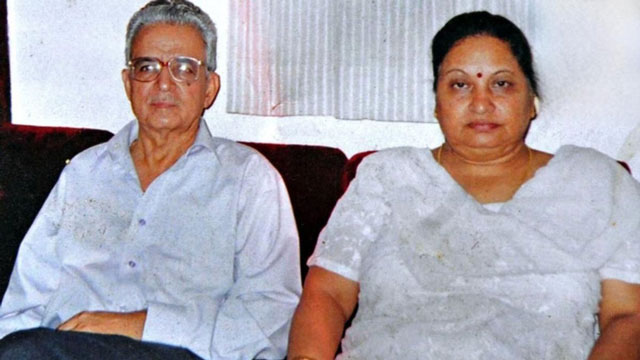
Murder that stunned the city
The crime came to light on February 16, 2009, when Anurag Sachdev, the adopted son and nephew of the retired professor, tried unsuccessfully to reach the family over the phone. Concerned, he asked neighbour Rajesh Diwan to check on them.
When Diwan arrived at the house, he found the door locked from outside. Looking through the window, he spotted Munna lying motionless on the floor and alerted the police.
Officers from the RT Nagar police station broke open the door and discovered the bodies of Purushottam, 71, Rita, 67, and their 35-year-old son inside the residence. Investigators later concluded the family had been murdered a day earlier.
Initial suspicion fell on Anurag, who had a history of drug abuse and previous run-ins with the police. However, investigators soon turned their attention to the family’s domestic help, Suchitra Haldar, her husband Deepak Haldar and their young daughter, who had disappeared after the murders.
The couple, originally from West Bengal, had been working at the Sachdev household for just over a month.
A search that stretched 2,000 km
With the investigation stalled, the case was handed to the Central Crime Branch and inspector C W Poovaiah was tasked with leading the probe.
By then, nearly ten months had passed since the murders. Poovaiah restarted the investigation from scratch, gathering details about the missing domestic help and her family.
His search eventually led him nearly 2,000 km away to West Bengal’s South 24 Parganas district. With only one officer, Vinay, remaining with him after months of fruitless searching, Poovaiah continued tracking leads in remote villages.
After several weeks of enquiries, a breakthrough came in November 2010 when a school teacher recognised the Haldars’ daughter from a photograph shown by the police.
Investigators then located a man who regularly picked up the child from school and followed him to a hut near Kulpi village on the edge of a forested Naxal-affected area.
Inside, the couple had been living under assumed identities — Deepak as Rahul and Suchitra as Sujatha.
Confession and arrests
When confronted, the accused initially denied their identities. However, police recovered the same family photograph they had been carrying during the search, exposing their lies.
During interrogation, Suchitra eventually admitted their involvement.
According to investigators, the murders were planned to rob the family. On February 15, 2009, when Rita opened the door, Deepak and an accomplice allegedly overpowered her and strangled her inside the house.
Purushottam, who was sleeping in another room, was also killed, while Munna was strangled using a Nokia mobile phone charger wire and a dupatta.
The accused fled with gold jewellery, Rs 30,000 in cash, silk sarees and other valuables.
Police later arrested two accomplices — Mohammed Sarbal and Bidan Shikari — while another accused, Pradeep Naskar, remained absconding.
Acquittal and reversal
Despite filing a chargesheet backed by dozens of witnesses and evidence, the case suffered a major setback in 2016 when a sessions court acquitted the accused, citing gaps in the chain of circumstantial evidence.
The Karnataka government challenged the verdict before the High Court.
During the appeal, government pleader Rashmi Patel relied on the “last seen” theory, pointing to testimony from a newspaper vendor who said Suchitra had collected the paper from the Sachdev residence on the morning of the murders while the accused were standing outside the gate.
The prosecution argued that the combination of motive, recovery of stolen articles, the conduct of the accused and their disappearance established a complete chain of circumstances.
The High Court agreed, ruling that the trial court had failed to properly evaluate crucial evidence and that the prosecution had proved the case beyond reasonable doubt.
Recognition for a long pursuit
Poovaiah, now retired, expressed satisfaction after the conviction. He said the long wait for justice had finally ended but added that his colleague Vinay deserved recognition for his role in tracking down the accused.
“I am very happy that justice has been served. The only pain I carry is that Vinay never received a medal for his work,” he said.
The High Court also directed the state government to consider stricter verification mechanisms for migrant workers employed in private homes, while stressing that such measures must not stigmatise migrant communities.