Daijiworld Media Network - Sheopur
Sheopur, May 12: In a major setback to India’s ongoing cheetah reintroduction programme, four cubs born to female cheetah KGP-12 were found dead at Kuno National Park in Madhya Pradesh’s Sheopur district on Tuesday morning.
Forest officials said the cubs, born on April 11, were around one month old. They were discovered during a routine monitoring exercise near their den site by a tracking team engaged in regular surveillance inside the park.
Authorities confirmed that the same monitoring team had observed all four cubs alive on Monday evening, indicating that their deaths occurred suddenly overnight.
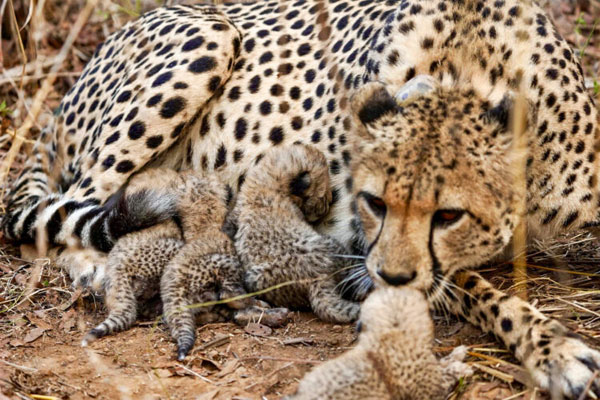
According to an official statement from the Field Director of Project Cheetah, the bodies of the cubs were found partially eaten, raising suspicion of a possible attack by a wild carnivore.
“The exact cause of death will be confirmed after the post-mortem report,” the statement said, adding that the mother cheetah, KGP-12, is safe and in good health under continuous observation.
Officials suspect that predators such as leopards, hyenas, or jackals—commonly present in the forest—may have attacked the vulnerable cubs, which are unable to defend themselves at such an early age.
Following the incident, surveillance and patrolling have been intensified across the area, and monitoring teams have increased vigilance around other cheetahs and newborn cubs in the park.
Forest authorities noted that ensuring the survival of cubs in open forest conditions remains one of the most challenging aspects of the cheetah restoration effort.
The incident comes shortly after Madhya Pradesh Chief Minister Mohan Yadav released two female cheetahs into the wild at Kuno as part of efforts to expand the free-ranging population.
With the latest deaths, the cheetah population at Kuno National Park stands at 50, including 33 cubs born in India under the breeding programme. Additionally, three cheetahs are housed at Gandhi Sagar Sanctuary, bringing India’s total cheetah population to 53.
India launched Project Cheetah in September 2022, marking the return of the species to the country after its extinction in 1952. The initiative began with cheetahs brought from Namibia, followed by additional translocations from South Africa, and has since recorded multiple successful litters despite ongoing challenges in wildlife survival.