Daijiworld Media Network – Tehran
Tehran, Mar 14: Even before the United States and Israel launched strikes, Iran had prepared a strategy to turn the Strait of Hormuz into a powerful strategic lever, according to sources cited by Reuters.
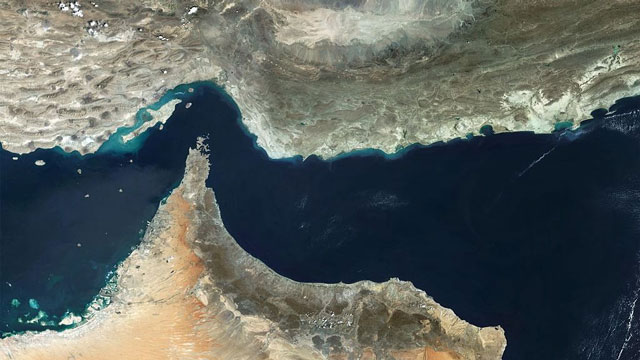
The narrow waterway is a vital route for global energy supplies, carrying nearly one-fifth of the world’s crude oil shipments. Any disruption to shipping through the strait can quickly send shockwaves through global energy markets.
Iran’s strategy draws lessons from the Tanker War during the Iran-Iraq War, when attacks on oil tankers made the Persian Gulf a highly dangerous corridor and forced the US Navy to escort commercial ships.
Today, analysts say Iran possesses more advanced and cost-effective tools, including missiles and drones capable of threatening shipping across a wide area without relying solely on sea mines.
According to Ali Vaez of the International Crisis Group, Iran understands it cannot win a direct military confrontation.
“Iran is outgunned – there is no way it can defeat them in a direct confrontation,” Vaez said, noting that Tehran had explored ways to prolong any future conflict following the tensions earlier this year.
He added that by targeting global energy supply routes, Iran could exert economic pressure on US President Donald Trump and force Washington to reconsider the war.
Asymmetric warfare strategy
Sources say the Islamic Revolutionary Guard Corps had long prepared for such a confrontation with Washington and Tel Aviv.
The plan was reportedly activated on February 28 after the death of Iran’s Supreme Leader Ali Khamenei during the first day of the conflict.
Instead of confronting superior military forces directly, Iran has opted for asymmetric warfare by targeting oil flows and striking US-linked interests across the Gulf region.
“This is asymmetric warfare par excellence,” said Michael Eisenstadt of the Washington Institute for Near East Policy.
He said even a limited number of attacks could impose significant economic costs and weaken public support for the war in the United States.
Decentralised command structure
Iran has also expanded its attacks across the region using drones and low-cost missiles, tactics previously employed by allied groups in Iraq, Yemen, Syria and Lebanon.
This approach forms part of Iran’s decentralised “mosaic defence” strategy, which spreads command and operational control across multiple units to maintain functionality even if senior leadership is targeted.
Despite the death of Khamenei, Iranian operations are reportedly being coordinated by senior leaders including Parliament Speaker Mohammad Baqer Qalibaf and national security chief Ali Larijani from Tehran.
Long war unlikely for US
Analysts believe the United States could significantly weaken Iran militarily, but a decisive defeat would require a massive ground invasion potentially involving hundreds of thousands of troops.
For now, Iran’s immediate goal is survival. Beyond that, Tehran hopes to demonstrate that military, economic or diplomatic pressure cannot easily force it into submission.
By leveraging its control over the Strait of Hormuz and expanding the conflict beyond its borders, Iran appears to be betting it can outlast a militarily stronger adversary.