Daijiworld Media Network - Washington
Washington, Mar 16: The ongoing conflict with Iran is intensifying political tensions in the United States while also pushing global oil prices higher as fighting disrupts shipping in the strategically vital Strait of Hormuz.
Now in its third week, the war has disrupted energy flows through the narrow waterway, a crucial corridor for global oil shipments, and triggered a fierce debate across the American political spectrum about the strategy, legality and consequences of the conflict.
Speaking on CNN’s programme State of the Union, US Ambassador to the United Nations Mike Waltz said American forces had inflicted major damage on Iran’s military infrastructure.
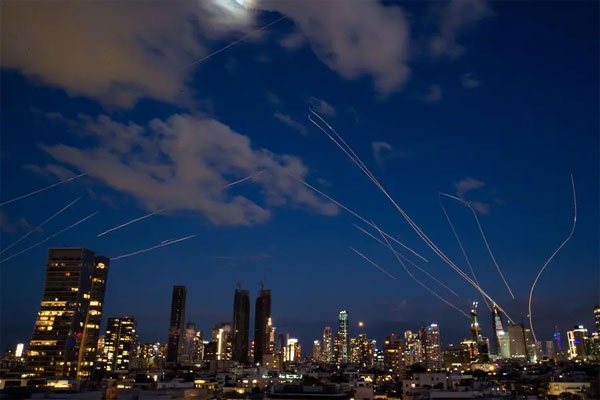
“Militarily, the US military has decimated Iran's air force, their air defenses, their missile capability and their missile production capability,” Waltz said in an interview with CNN anchor Jake Tapper. “This has been a dominant victory, the likes of which we haven't seen in modern American military history.”
Waltz also claimed that Tehran was becoming increasingly isolated on the global stage, pointing to support within the United Nations for condemning Iranian strikes on civilian infrastructure.
“The Iranian regime has never been more diplomatically isolated,” he said.
Meanwhile, US President Donald Trump indicated that the conflict could continue until Washington considers its objectives fulfilled.
Asked in remarks aired by Fox News when the war might end, Trump said: “I can't touch that. I mean, I have my own idea. It'll be as long as it's necessary.”
Iran has sought to use its strategic position around the Strait of Hormuz to exert pressure on global energy markets, raising concerns about prolonged disruptions to oil supplies and shipping routes.
Waltz warned that the impact would be felt most strongly in Asia. “Eighty percent of the oil coming out of the Gulf heads to Asia,” he said, arguing that countries dependent on the region’s energy exports should help secure the waterway.
The conflict has also drawn strong criticism from Democrats, who accuse the administration of launching the military action without approval from the United States Congress.
Democratic senator Cory Booker said the war represented a constitutional overreach by the White House.
“It’s outrageous that this is a unilateral war started by one person, the president,” Booker said during the CNN discussion. “The Constitution clearly says a war, especially something of this magnitude, should come to Congress.”
He added that the scale of the operation required serious scrutiny. “This is a massive military undertaking… costing American taxpayers billions and billions of dollars and tragically costing 13 lives,” Booker said.
Former US transportation secretary Pete Buttigieg also criticised the administration’s handling of the conflict in a separate CNN interview.
“What I'm worried about is not the soldiers and the people who are serving. What I'm worried about is their political leadership,” Buttigieg said.
He warned that Americans were already beginning to feel the economic consequences of the war. “Mortgage rates are up because of this war. Food is going to be more expensive because of this war. And, of course, the price of gas that we're paying at the pump is higher because of this war,” he said.
According to the United States Department of Defense, at least 13 US service members have died since the conflict began. Among them were six personnel killed when a refuelling aircraft crashed in Iraq. Officials said the cause of the crash remains under investigation.