Daijiworld Media Network - New Delhi
New Delhi, Mar 24: Excessive use of smartphones has been linked to a higher risk of eating disorders among young people, according to a recent study published in the Journal of Medical Internet Research, raising fresh concerns over digital behaviour and mental well-being.
The research focused on “problematic smartphone use” (PSU), a condition marked by psychological dependence on mobile devices, and its impact on eating habits and body image perception.
The analysis reviewed 35 studies involving more than 52,000 participants, with an average age of 17 years, indicating the widespread nature of the issue. It found that adolescents who experience anxiety when separated from their smartphones or struggle to limit usage are more likely to exhibit disordered eating patterns.
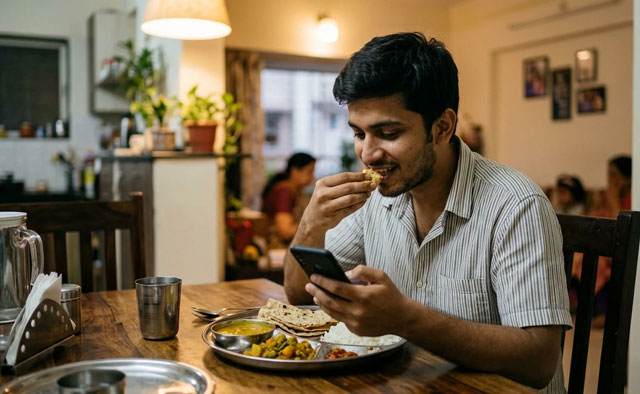
These include emotional overeating, uncontrolled food consumption, and signs of food addiction, often without a formal diagnosis.
The study also identified a key threshold, noting that risks increase significantly among individuals using smartphones for over seven hours a day. Higher levels of body image dissatisfaction were also observed, largely driven by constant exposure to idealised images on social media platforms.
Researchers highlighted that PSU differs from general screen time, as it involves withdrawal symptoms, lack of control, and distress affecting daily life. While smartphones do not directly cause eating disorders, they act as a major contributing factor.
Beyond eating behaviours, excessive smartphone use has also been associated with broader issues such as anxiety, depression, reduced physical activity, and lower productivity.
Experts stressed that managing digital habits could play a crucial role in prevention and treatment. They recommend limiting screen time, taking regular breaks from devices, and encouraging offline activities to support overall mental and physical health, particularly among the youth.