Daijiworld Media Network – Washington
Washington, May 20: The United States and Israel reportedly explored a controversial plan to bring about regime change in Iran during the early stages of the ongoing conflict, with former Iranian president Mahmoud Ahmadinejad allegedly considered as a possible leader in a post-war political setup, according to a report published by The New York Times.
The report claimed that the strategy involved removing Iran’s top leadership through coordinated military strikes and eventually installing an alternative government in Tehran.
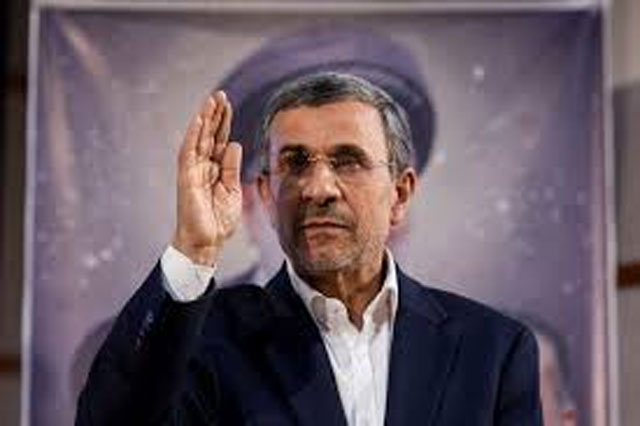
According to unnamed US officials quoted in the report, an Israeli air strike targeting Ahmadinejad’s residence in Tehran was allegedly aimed at freeing him from restrictions imposed by Iranian authorities and positioning him for a future political role.
However, the proposed plan reportedly failed to progress as expected after the former president survived the attack but allegedly distanced himself from the broader regime-change effort.
Ahmadinejad, who served as Iran’s president from 2005 to 2013, is widely known for his hardline anti-Western stance, strong backing of Iran’s nuclear programme and repeated criticism of the United States and Israel.
Despite his controversial political record, the report claimed some officials in Washington viewed him as someone capable of stabilising Iran in the aftermath of a potential collapse of the current regime.
The report further stated that the proposed strategy involved multiple stages, beginning with US-Israeli military strikes targeting senior Iranian leaders and strategic infrastructure.
Subsequent phases allegedly included attempts to trigger unrest inside Iran through influence operations and mobilisation of anti-government elements.
Israeli planners reportedly believed that internal instability, combined with damage to infrastructure and growing public dissatisfaction, could weaken the Iranian government and create conditions favourable for political transition.
The report described the strike on Ahmadinejad’s residence as effectively a “jailbreak operation”, aimed at releasing him from what officials described as house arrest.
While initial Iranian media reports claimed Ahmadinejad had been killed, later reports confirmed that he survived the attack though several security personnel stationed near the residence were reportedly killed.
Following the incident, Ahmadinejad has largely remained out of the public eye, with his current location and condition remaining unclear.
The report also highlighted Ahmadinejad’s strained relationship with Iran’s ruling establishment in recent years. After leaving office, he openly criticised sections of the Iranian leadership and repeatedly attempted to contest presidential elections, only to be disqualified by the Guardian Council.
Over time, authorities reportedly imposed increasing restrictions on his movements and political activities.
The report added that speculation regarding possible links between some of Ahmadinejad’s associates and Western intelligence agencies had surfaced in recent years, though no official confirmation has emerged.
According to The New York Times, while the initial military campaign caused significant disruption, the broader regime-change strategy ultimately failed to achieve its objectives, with Iran’s government continuing to remain in power despite intense military and political pressure.
The developments, the report noted, exposed what critics described as a major miscalculation by both the United States and Israel regarding the resilience of Iran’s political system.