Daijiworld Media Network – Mangaluru
Mangaluru, Jun 16: Although the monsoon has not intensified as expected in the Dakshina Kannada (DK) district this year, its erratic patterns have created new healthcare challenges. The combination of intermittent rain, intense heat, and high humidity has led to a surge in cases of dengue, viral fever, skin diseases, and respiratory issues.
With 20 dengue cases already reported in the district, there are concerns of a further spike in the coming days. The lack of continuous rainfall, coupled with stagnant water, has created an ideal breeding ground for Aedes mosquitoes. Mosquito breeding has increased due to water accumulating in empty plots, old tyres, drains, and discarded containers around houses.
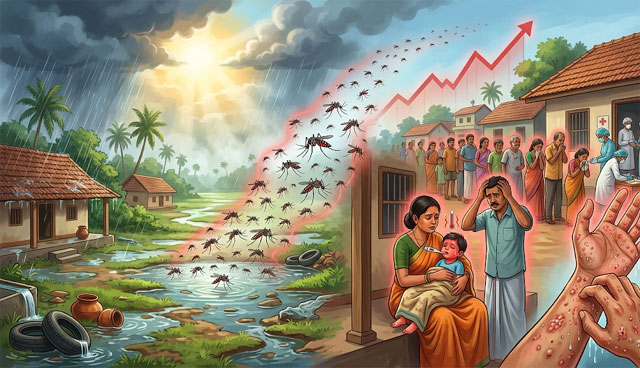
The health department has urged the public to maintain cleanliness around their homes and take precautions to prevent water stagnation. District surveillance officer Dr Naveen Chandra Kulal stated that environmental cleanliness is the most crucial factor in controlling dengue, advising people to seek immediate medical evaluation and treatment as soon as symptoms appear.
Cases of viral fever have also seen a significant rise. Symptoms such as cough, cold, sore throat, body ache, and fever lasting for four to five days have become common. Since the initial symptoms of dengue and viral fever are extremely similar, diagnosing the exact illness has become a challenge for doctors.
A surge in fever, skin diseases, cold, cough, and respiratory issues has been reported across various parts of the district, including Mangaluru, Bantwal, Beltangady, Puttur, Sullia, and Moodbidri. Children and the elderly are proving to be the most vulnerable to these changing weather conditions.
The increased humidity has also led to a rise in skin allergies, fungal infections, and foot-related infections. School-going children and labourers who spend long hours working in damp conditions or water are particularly susceptible to these issues.
Keeping the health and safety of children in mind, the Dakshina Kannada zilla panchayat has mandated regular testing of drinking water quality in anganwadis, schools, and colleges. The state Panchayat Raj department has issued directives to all zilla panchayats, instructing them to test water sources in laboratories and ensure only safe, quality water is consumed. The health and Panchayat Raj departments are gearing up to intensify this testing drive across the district.
According to health department data, the majority of dengue cases typically occur during the monsoon season and decline once the rains recede. However, the equal spread of dengue across both urban and rural areas this year has become a major cause for concern for health officials.