Daijiworld Media Network - Mangaluru
Mangaluru, June 21: Even as the southwest monsoon season progresses, large parts of coastal Karnataka continue to experience unusually dry, summer-like conditions, with Dakshina Kannada district recording a massive 54% rainfall deficit and rivers showing worrying signs of depletion. The weak monsoon has begun affecting agriculture, water resources and daily life across the region.
Although the India Meteorological Department (IMD) had initially forecast the onset of the monsoon over Kerala by May 29, it officially arrived only on June 4 before advancing into Karnataka through the coastal belt. However, the monsoon weakened soon after its arrival, resulting in a sharp decline in rainfall across Dakshina Kannada.
Rainfall sees dramatic plunge
Official data show a steep drop in rainfall compared to the previous year. Between June 1 and June 19, 2025, the district received 998.8 mm of rainfall. During the corresponding period this year, rainfall stood at just 229.1 mm, representing a deficit of 54% compared to normal levels.
The district has also failed to reach its normal rainfall benchmark of 502 mm for the period. While Dakshina Kannada recorded 8% excess rainfall overall last year, the current season has witnessed one of the sharpest declines in recent times.
Every taluk reports rainfall shortage
The rainfall deficit has been recorded across all taluks of the district. Between June 1 and June 19 last year, Belthangady received 1,121.1 mm of rainfall, Bantwal 1,034.9 mm, Mangaluru 880.4 mm, Puttur 881.2 mm, Sullia 869.5 mm, Moodbidri 1,144.4 mm, Kadaba 981.2 mm, Mulki 930.5 mm and Ullal 799.9 mm.
During the same period this year, the figures fell sharply to 210.5 mm in Belthangady, 218 mm in Bantwal, 307.2 mm in Mangaluru, 168.9 mm in Puttur, 203 mm in Sullia, 227.2 mm in Moodbidri, 264.8 mm in Kadaba, 288.4 mm in Mulki and 327.9 mm in Ullal.
Even in 2025, Mangaluru, Puttur, Mulki and Ullal taluks had recorded below-normal rainfall. However, the district as a whole still ended the season with excess rainfall. This year, the deficit has become widespread across the region.
Rivers shrink after barrage gates opened
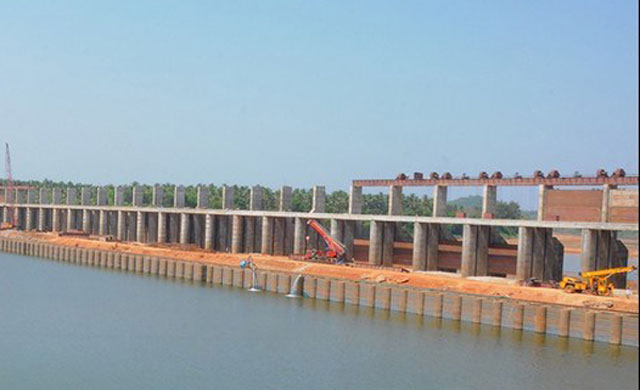
The weak monsoon has already begun affecting river systems and water storage structures. Following rainfall during the opening days of June, authorities opened the gates of several barrages and dams across the district.
The gate of the Biliyooru barrage near Uppinangady was opened after water levels rose initially. However, with rains failing to continue, the Netravathi River at Uppinangady, which was flowing abundantly earlier in the month, now presents a strikingly different picture, with water levels dropping sharply and large stretches appearing nearly dry.
A similar situation has emerged in the Payaswini River in Sullia, where barrage gates were opened after early monsoon showers. Subsequent dry weather caused water levels to decline significantly, creating concerns over drinking water availability. Authorities later undertook desilting operations and arranged water flow towards the jackwell to ease the situation.
Small streams, rivulets and water channels that briefly came alive after the initial rains have once again begun drying up as the dry spell continues.
Farmers fear impact on paddy cultivation
The rainfall shortage is causing growing concern among paddy farmers, many of whom are preparing fields for transplantation. The absence of sustained rain has delayed agricultural operations and increased uncertainty over the upcoming cultivation season.
Agricultural experts warn that inadequate rainfall could affect the second and third phases of paddy transplantation. Many farmers now fear they may be able to undertake only a single phase of planting if weather conditions do not improve.
At the same time, arecanut growers believe the reduced rainfall may lessen the threat of Koleroga, a fungal disease that typically spreads during prolonged wet conditions. The dry weather has also enabled plantation owners to carry out pesticide spraying more effectively.
Netravathi highlights the severity of the crisis
The impact of the weak monsoon is perhaps most visible in the condition of the Netravathi River. On June 19, 2025, the river at Uppinangady was flowing bank-full. Photographs taken on June 19, 2026, reveal dramatically reduced flow and exposed river stretches, underscoring the scale of the rainfall deficit.
The comparative photographs were provided by Dinesh B, leader of the Uppinangady Flood Protection Team, illustrating the stark difference in river conditions within a year.
“This year's monsoon has clearly weakened. If rainfall does not improve before the end of June, paddy farmers are likely to face difficulties. Paddy nursery activities are currently under way, and if adequate rainfall is not received before transplantation begins in July, cultivation will be affected. Alternative measures will also be considered,” said Honnappa Gowda, joint director of the Agriculture Department, Mangaluru.