Daijiworld Media Network – New Delhi
New Delhi, Jul 15: The Comprehensive Economic and Trade Agreement (CETA) between India and the United Kingdom came into effect on Wednesday, paving the way for lower tariffs, expanded market access and a significant boost to bilateral trade.
The agreement aims to increase India-UK trade from the current USD 55-60 billion to USD 100 billion by 2030.
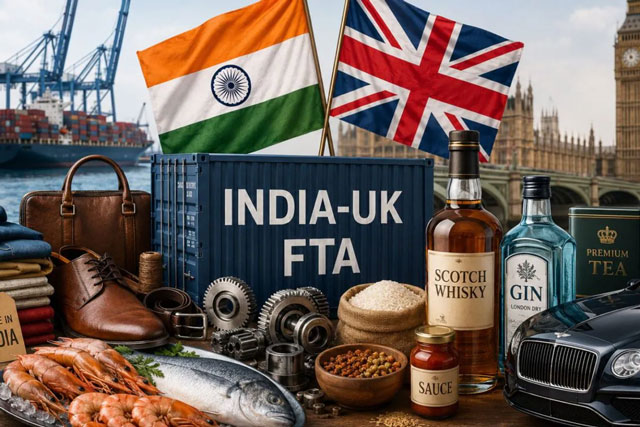
Under the pact, nearly 99 per cent of Indian exports to the UK will enjoy duty-free access. Sectors expected to benefit include textiles and garments, leather and footwear, seafood, gems and jewellery, engineering goods, auto components, chemicals, electrical equipment and sports goods.
Prime Minister Narendra Modi described the agreement as a milestone that would strengthen economic ties between the two countries and create new opportunities for Indian farmers, workers, MSMEs, startups and innovators, contributing to the vision of Viksit Bharat 2047.
On the UK side, tariffs on several British products exported to India will be reduced in phases. Import duties on Scotch whisky, currently as high as 150 per cent, will be lowered to 75 per cent initially and further reduced to 40 per cent over the next decade. Duties on British cars will also be cut from up to 110 per cent to 10 per cent under a quota system, with electric and hybrid vehicles also covered by the agreement.
As a result, products such as Scotch whisky, gin, chocolates, biscuits, cosmetics, premium British cars, machinery, medical devices and certain auto parts are expected to become more affordable for Indian consumers over time.
The UK, meanwhile, will reduce tariffs on Indian goods, including clothing, footwear and selected food products, making Indian exports more competitive in the British market and potentially lowering prices for UK consumers.
To safeguard domestic interests, India has excluded sensitive agricultural products such as dairy items, sugar, rice, apples, cheese, chicken, pork and eggs from the agreement, protecting Indian farmers and the dairy sector from increased foreign competition.
Officials expect the agreement to deepen economic cooperation, enhance investment flows and generate employment opportunities in both countries. Estimates suggest bilateral trade could grow by nearly 39 per cent by 2040, adding billions of pounds in annual trade between India and the UK.