Daijiworld Media Network - New Delhi
New Delhi, Nov 6: Air pollution in India has emerged as a major public health concern, with its effects extending beyond respiratory illnesses to include cardiovascular diseases, strokes and other long-term health complications. A new knowledge paper by the Federation of Indian Chambers of Commerce and Industry (FICCI) and EY has called for a shift in the country's clean-air strategy, emphasising year-round measures to reduce public exposure to harmful pollutants.
The report, titled Clean Air, Healthy India, states that more than two million deaths in India were attributable to air pollution in 2023. It also highlights gaps in the National Clean Air Programme (NCAP), particularly its emphasis on reducing PM10 levels rather than giving greater attention to PM2.5, which poses serious health risks.
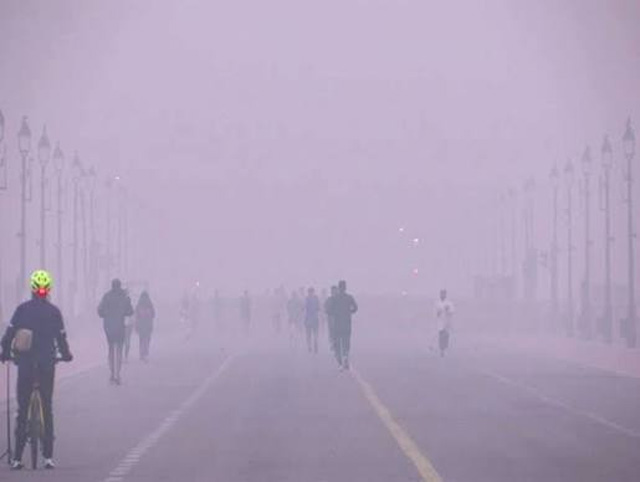
The recommendations come amid deteriorating air quality across several northern cities. On November 6, Delhi recorded 'very poor' air quality in early-morning readings, while several cities in Uttar Pradesh and Haryana also reported high pollution levels.
The report explains that fine particulate matter, known as PM2.5, consists of particles measuring 2.5 micrometres or smaller. These particles can penetrate deep into the lungs and enter the bloodstream, increasing the risk of respiratory diseases, heart conditions, strokes and cognitive impairment. The resulting health burden also contributes to rising healthcare costs and reduced productivity.
Dr Ashutosh Raghuvanshi, Chair of the FICCI Health Services Committee and MD and CEO of Fortis Healthcare, said clean air must become a central part of India's healthcare agenda rather than being viewed solely as an environmental concern. He said healthcare institutions have an important role in creating public awareness, monitoring pollution-related illnesses and strengthening preparedness. He also called for closer cooperation between governments, industry and healthcare providers to translate clean-air commitments into measurable public health improvements.
The economic impact of air pollution is also significant. According to the report's estimates for 2022, pollution-related economic losses could account for 9 to 9.5 per cent of India's GDP. Annual business losses were estimated at around USD 95 billion, or nearly three per cent of GDP, due to reduced productivity, absenteeism and operational inefficiencies. The report further estimates that pollution-related health problems result in the loss of around 1.3 billion working days annually.
Dr Arun Agarwal, Chair of the FICCI Working Group on Air Pollution (Healthcare Perspective), former Dean of Maulana Azad Medical College and Medical Advisor to Apollo Hospitals Group, said India must move beyond seasonal responses to pollution and make exposure reduction a year-round public health priority. He stressed the need to link air-quality monitoring with health surveillance, strengthen preventive measures and design interventions according to local pollution sources.
The report identifies several major contributors to air pollution, including vehicle and industrial emissions, construction and road dust, crop-residue burning, thermal power generation, waste burning and the use of polluting household fuels. Their contribution varies across regions and seasons, making locally tailored solutions essential.
It acknowledges progress under the NCAP, noting that 103 of 130 cities recorded reductions in PM10 levels between 2017-18 and FY24-25, with 64 cities registering reductions of more than 20 per cent. However, it recommends complementing PM10 monitoring with specific PM2.5 reduction targets, controls on precursor gases and indicators that measure public exposure and health outcomes.
The report also calls for stronger dust-control measures at construction sites, expanded local air-quality monitoring, improved traffic management, real-time industrial emission monitoring and the adoption of cleaner technologies. It recommends replacing diesel generator sets with battery-hybrid systems wherever feasible and encouraging traditional brick kilns to adopt cleaner zig-zag firing technology.
To address agricultural pollution, it proposes converting crop residue into fuel and other marketable products through improved collection systems and assured markets. It also highlights the potential of reusing plastic, industrial residue and construction waste in building materials and infrastructure.
The report further advocates an airshed-based approach, recognising that air pollution crosses municipal and state boundaries and requires coordinated action across regions. According to the assessment cited in the report, sources within Delhi account for approximately 36 per cent of the city's PM2.5 pollution during winter and 26 per cent during summer.
The report emphasises that India's clean-air efforts should be measured not merely by the number of policies introduced or interventions undertaken, but by their ability to reduce people's exposure to harmful pollutants and improve public health. It calls for stronger PM2.5 targets, improved monitoring, cleaner infrastructure and sustained coordination among governments, healthcare institutions, industries and communities.