Daijiworld Media Network - Panaji
Panaji, May 16: Health authorities have issued a strong advisory urging residents and communities to eliminate even the smallest pockets of stagnant water, warning that such areas can quickly become breeding grounds for mosquitoes as the monsoon approaches.
The message was reinforced during a dengue prevention and control awareness workshop held by the Urban Health Centre (UHC), Panaji, on National Dengue Day. The session included participation from housing society representatives, contractors, and nodal officers, with a focus on preventing mosquito breeding at the source through collective action.
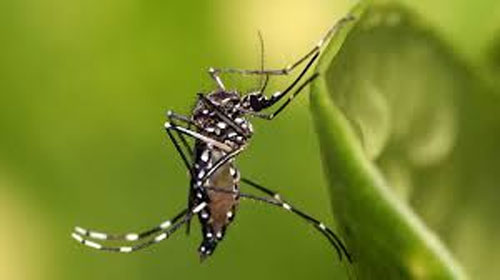
Officials stressed that dengue prevention is far more dependent on routine cleaning and elimination of stagnant water around homes than on tackling larger water bodies alone.
UHC Panaji Health Officer Dr. Vidya Parab noted that public misunderstanding persists about what causes mosquito breeding. She explained that even minimal water accumulation is enough for mosquitoes that spread dengue and malaria to multiply.
Common overlooked breeding spots, she said, include flower pot trays, discarded tyres, coconut shells, water storage drums, and any uncovered containers left outdoors.
Dr. Parab also highlighted that only female mosquitoes bite humans, as they require blood for reproduction, and added that dengue and chikungunya are primarily spread by day-biting mosquitoes, especially active during early mornings and late afternoons.
She further pointed out that chikungunya has no specific cure, with treatment focusing mainly on relieving symptoms. According to her, prevention and public awareness remain the most effective tools for control.
She added that the Urban Health Centre begins pre-monsoon inspection and awareness drives nearly a month in advance across residential societies, workplaces, and public spaces. Despite these efforts, cases continue to appear due to persistent breeding in small, often ignored water collection points.
Field staff also reported practical challenges in implementation. Sanitary Inspector Kishor Arondekar said inspection teams sometimes face difficulty gaining access to housing societies for routine monitoring and awareness activities.
He called for stronger community participation and recommended that every housing society conduct a “dry day” every two weeks, during which all potential water-holding containers and plant trays are checked and cleaned.
Arondekar also flagged recurring issues at construction sites and government facilities, where containers, buckets, and stored water in washrooms continue to serve as breeding grounds despite repeated warnings.
Extension Health Educator Arpita Korgaonkar added that mosquito breeding is not limited to outdoor spaces. She pointed out that indoor plants, such as money plants kept in water-filled containers, are also common unnoticed breeding sites.
She also raised concern over delayed medical consultation, noting that many individuals self-medicate for several days before seeking professional care, which can worsen the spread.
Emphasising transmission risk, she explained that a single infected mosquito can bite multiple people, increasing the speed of disease spread, and urged prompt diagnosis, hydration, and medical attention.
GoaCAN Coordinator Roland Martins stressed that long-term mosquito control depends heavily on sustained community involvement, especially in densely populated areas.
He suggested that housing societies, panchayats, and local biodiversity committees integrate vector control discussions into their regular meetings and Gram Sabhas.
Martins also highlighted the importance of natural mosquito predators like fish and frogs in helping regulate mosquito populations.
Officials concluded by warning that hidden breeding spots—such as tyres stored on tarpaulins or left outdoors—can become major mosquito hotspots if rainwater collects and remains unattended.