Daijiworld Media Network - Thiruvananthapuram
Thiruvananthapuram, Mar 25: Despite a legacy of pioneering women leaders, Kerala continues to witness poor representation of women in electoral politics, raising concerns ahead of the upcoming Assembly elections.
The state that produced stalwarts like Rani Gouri Lakshmi Bai, Mary Punnen Lukose, Ammu Swaminathan, Kuttimalu Amma, Accamma Cherian, Dakshayani Velayudhan, O Aisha Beevi and K R Gouri Amma now finds itself grappling with gender imbalance in power structures.
Women account for just 10.5 per cent of candidates in the current election, with only 54 women and one transgender candidate contesting across 140 constituencies. In the outgoing Assembly, only 12 of 140 MLAs were women, compared to eight in the 2016–2021 term.
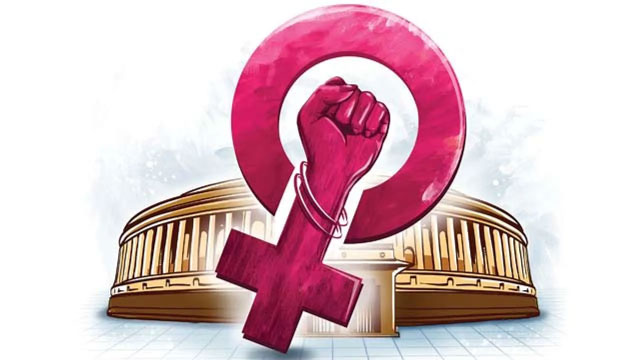
Activists say the situation is disappointing, especially as the Women's Reservation Bill—which mandates 33 per cent reservation for women in Parliament and state assemblies—is expected to be implemented by 2029.
The Thulya Prathinidhya Prasthanam (TPP), a social collective advocating equal representation, has been vocal about the issue. Its convener K M Rema said that Kerala’s claim of being a progressive state does not reflect in its political representation of women.
Among major parties, the Communist Party of India (CPI) has fielded four women candidates in 25 constituencies, while the Indian Union Muslim League (IUML) has nominated two women—an improvement from the previous election. The Bharatiya Janata Party (BJP) has fielded the highest number of women candidates, though TPP said it did not consider NDA candidates due to ideological differences.
The collective has even urged women voters to consider NOTA in constituencies where neither the Left Democratic Front (LDF) nor the United Democratic Front (UDF) has fielded women candidates.
Experts attribute the imbalance to deep-rooted patriarchy. Prabhash J from the University of Kerala said that while women’s participation is higher at the local body level, their presence declines as power increases.
“Women have led change in education and entrepreneurship. Now, they must assert themselves in politics too,” he said, adding that increasing voter turnout among women should translate into greater political participation.
At the same time, analysts note a gradual shift in political thinking. Writer and socio-political analyst J Devika said parties are beginning to frame policies that recognise women as individuals rather than just members of households.
Schemes such as free bus travel and direct financial assistance for women reflect their growing importance as a decisive voter base, she added.
With polling scheduled for April 9, observers say women voters could play a crucial role in shaping the political direction of Kerala, even as their representation in the electoral arena remains limited.