Daijiworld Media Network - Srinagar
Srinagar, Apr 6: A recent audit by the Comptroller and Auditor General of India has revealed a severe environmental crisis in Jammu and Kashmir, showing that 518 out of 697 surveyed lakes have either vanished or degraded beyond recovery.
The analysis, covering the period from 1967 to 2020, found that 315 lakes have completely disappeared due to encroachment, urban expansion, and land-use changes. Seven water bodies—Rakh-e-Arth, Sethergund Numbal, Marhama, Devpursar, Mahtan, Chandargar Numbal, and Galwal Talao—have dried up entirely, effectively becoming “invisible.”
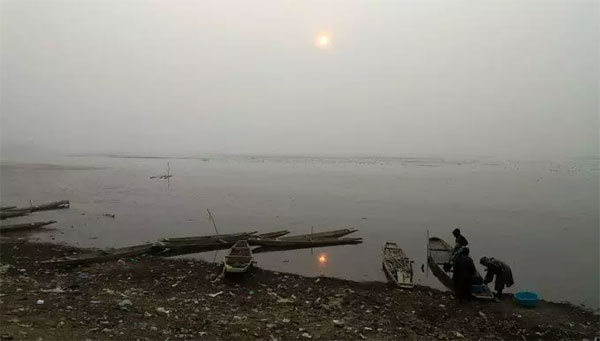
The report attributes the widespread degradation largely to human activities, including the conversion of wetlands for agriculture, residential, and commercial use. Conservation programs for major lakes, such as Dal Lake and Wullar Lake, have failed, with untreated sewage discharge and ineffective management cited as key issues.
Of the 315 vanished lakes, 235 were under the Revenue and Agriculture Departments, while 80 fell under the Forest Department’s oversight. Only six lakes—Dal, Wullar, Hokersar, Manasbal, Surinsar, and Mansar—received focused attention, leaving the remaining 691 without adequate management plans. The CAG has recommended creating a specialised, unified authority to halt further losses and oversee restoration efforts.
In a related concern, a recent scientific study identified five high-altitude glacial lakes in the Kashmir Himalayas as highly susceptible to Glacial Lake Outburst Floods (GLOFs), which can be triggered by extreme weather events such as cloudbursts. The high-risk lakes include Bramsar and Chirsar in Kulgam, Nundkol and Gangabal in Ganderbal, and Bhagsar in Shopian. The study, conducted by researchers from the University of Kashmir, also assessed potential downstream impacts across the region, underscoring the urgent need for preventive and monitoring measures.