Daijiworld Media Network - Jerusalem
Jerusalem, Apr 6: Recent developments indicate that Israel is increasingly moving beyond a reactive security posture to actively shaping regional dynamics through a mix of military action and strategic partnerships, according to emerging geopolitical analysis.
The approach combines direct interventions in conflict zones such as Gaza, Lebanon, Syria and Iran, alongside efforts to influence broader regional alignments.
Analysts note that Israeli military operations are no longer limited to immediate tactical objectives but also impact governance structures, infrastructure and territorial cohesion in neighbouring regions. This, they suggest, contributes to environments where state authority remains fragmented and less capable of consolidation.
The strategy appears to be unfolding alongside shifting global dynamics, particularly Israel’s evolving ties with the United States, which are seen as providing greater operational flexibility and reducing the political costs of unilateral actions.
At the regional level, Israel has been strengthening partnerships in the eastern Mediterranean, notably with Greece and Cyprus. These ties increasingly involve defence cooperation, intelligence sharing and joint military exercises, forming what observers describe as an integrated security framework.
Such collaborations are also influencing regional tensions, particularly with Turkey, which has been portrayed in some Israeli assessments as a potential future strategic challenge. The evolving alliances are seen as reshaping geopolitical equations around maritime boundaries, energy exploration and airspace disputes.
Beyond the Mediterranean, similar patterns are observed in the Horn of Africa. Israel’s recognition of Somaliland is viewed as introducing new dynamics in a strategically sensitive region near the Bab el-Mandeb Strait, a key global shipping route.
Experts suggest that these moves are less about direct confrontation and more about positioning within complex geopolitical environments, where multiple actors and competing interests limit the emergence of stable alliances.
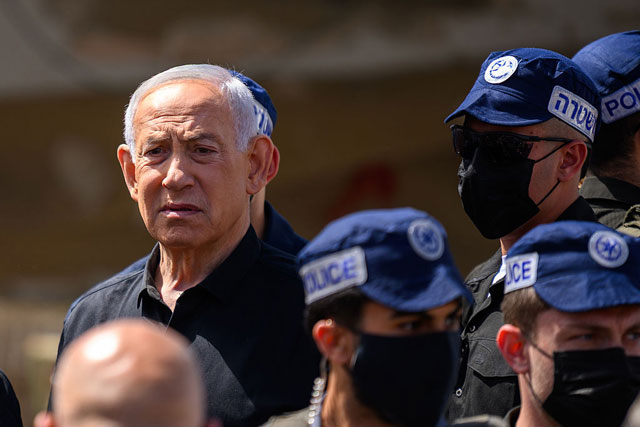
Under Prime Minister Benjamin Netanyahu, Israel’s security doctrine appears to be evolving toward a model that prioritises strategic autonomy, military strength and sustained influence over long-term negotiated stability.
Observers say this approach reflects a broader shift where managing regional tensions becomes a strategic tool, rather than resolving them, potentially reshaping the Middle East’s geopolitical landscape in the years ahead.