Daijiworld Media Network - Rome
Rome, May 10: US President Donald Trump has said he is “still considering” relocating American troops stationed in Italy, while suggesting that Italy did not provide adequate support to the United States during times of need, according to remarks reported by Italian media.
In a phone interview with local outlets, including Corriere della Sera, Trump declined to comment on Iran’s expected response to a US peace proposal linked to ongoing tensions in the region. Iran’s reply had been anticipated earlier in the week, according to reports.
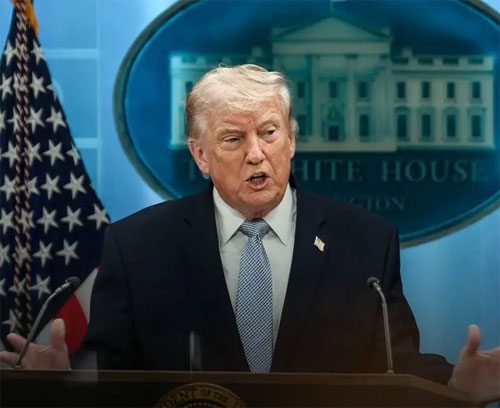
His comments come amid renewed diplomatic activity involving US Secretary of State Marco Rubio, who was in Rome on Friday and stated that Iran was expected to respond to Washington’s proposal aimed at addressing the continuing conflict.
Responding to Trump’s remarks on potential troop relocation, Italian Defence Minister Guido Crosetto said he “cannot understand” the rationale behind such a move. He emphasised that Italy remains committed to international security cooperation, including participation in coalition efforts focused on maritime safety in the Strait of Hormuz, particularly mine clearance and protection of shipping routes.
Italian news agency ANSA had earlier reported on May 1 that Trump was considering reducing US military deployments in both Spain and Italy, criticising European allies for their role in the broader US-Israel-Iran tensions.
According to data from the US Department of Defence, approximately 12,700 active-duty American troops were permanently stationed in Italy as of the end of 2025, making it the second-largest US military presence in Europe after Germany.
Trump has previously indicated plans to scale down US forces in Europe, including Germany, stating earlier in May that reductions would go beyond initial expectations. He also argued that congressional oversight of military operations can weaken US negotiating positions, claiming such scrutiny “hurts negotiating ability” during sensitive diplomatic engagements.
The latest remarks add further uncertainty to transatlantic defence coordination at a time of heightened geopolitical tensions involving Iran and ongoing security concerns in the Middle East.