Daijiworld Media Network - Mumbai
Mumbai, May 11: Indian stock markets opened the week on a weak note, with benchmark indices slipping nearly 1 percent each in early trade amid rising global uncertainty triggered by stalled peace talks between the United States and Iran over the West Asia conflict.
The BSE Sensex dropped as much as 943 points, or 1.22 percent, to an intraday low of 76,384, while the Nifty 50 fell 280 points, or 1.15 percent, to 23,897.
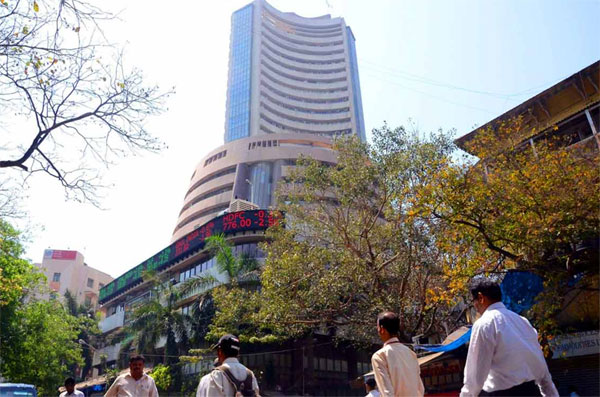
Selling pressure was broad-based, with all sectoral indices trading in the red. Heavy losses were seen in Nifty Consumer Durables, Auto, PSU Bank, Private Bank, Oil & Gas, and Chemicals, with declines reaching up to 3 percent in some segments.
Among major laggards were stocks such as Titan, IndiGo, Mahindra & Mahindra, Shriram Finance, Eternal, Maruti Suzuki, Bajaj Auto, Bajaj Finserv, Bharti Airtel, HDFC Life, Eicher Motors, and Dr Reddy’s Laboratories.
Market volatility also edged higher, with the India VIX rising nearly 2 percent to 10.7, signalling increased investor nervousness.
Earlier in the day, the Sensex opened at 76,638.09, down 690 points, while the Nifty began trading nearly 200 points lower at 23,970.
Analysts attributed the weakness to two major global and domestic headwinds. The first is the renewed escalation in West Asia tensions after US President Donald Trump rejected Iran’s response to a peace proposal, effectively dimming hopes of a near-term resolution.
Trump’s remarks have further dampened expectations of stability in the region, especially regarding the reopening of key oil shipping routes through the Strait of Hormuz.
As a result, crude oil prices surged sharply in global markets. Brent crude climbed 4.41 percent to $105.76 per barrel, while West Texas Intermediate (WTI) rose 5.12 percent to $100.31 per barrel.
Market experts noted that rising oil prices could widen India’s current account deficit and add inflationary pressure. They also pointed to recent comments by Prime Minister Narendra Modi urging reduced consumption of fuel, gold, fertilisers, and edible oils, as well as discouraging non-essential foreign travel, as part of broader economic caution amid rising global costs.
According to analysts, such measures indicate a focus on managing external economic pressures, though they may slightly weigh on growth expectations for FY27. Sectors linked to petroleum, aviation, fertilisers, gold, and hospitality are expected to face sentiment-driven pressure, while defensive sectors like pharmaceuticals may remain relatively stable.
In Asia, markets were mixed. Japan’s Nikkei and Hong Kong’s Hang Seng declined about 0.3 percent each, while South Korea’s KOSPI surged over 4 percent, reflecting divergent regional reactions to global risk sentiment.