Daijiworld Media Network - New Delhi
New Delhi, Jul 21: The Central government on Tuesday said it has significantly strengthened India's fertiliser security by expanding domestic production, diversifying import sources and improving supply management to ensure farmers receive adequate fertilisers despite global market uncertainties.
According to an official statement, India's annual urea production capacity has increased to 269.42 lakh metric tonnes (LMT) following the commissioning of six new fertiliser plants, which together added 76.2 LMT of capacity.
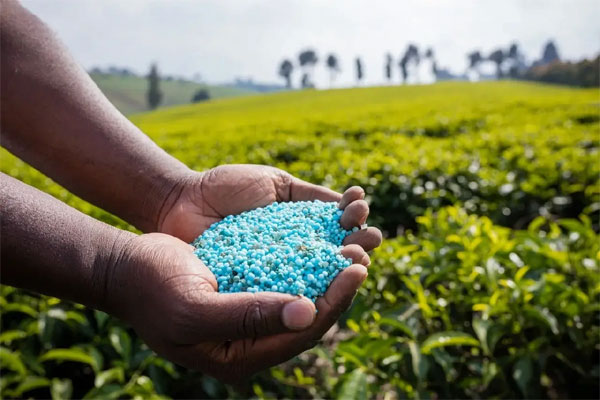
To bridge any supply gaps and maintain sufficient stocks, the government also procured 42.7 LMT of urea through international tenders. This included 25 LMT imported in April 2026 and 17.7 LMT in June 2026.
The government noted that domestic fertiliser production can be affected by factors such as raw material availability, feedstock supply, fluctuations in global prices and plant maintenance shutdowns. To minimise disruptions, it has expanded sourcing options and strengthened procurement from international markets.
The statement said fertiliser demand for each agricultural season is assessed by the Department of Agriculture and Farmers Welfare in consultation with state governments, while the Department of Fertilisers manages monthly allocations and monitors distribution through the Integrated Fertiliser Management System (iFMS).
Regular review meetings with state authorities, coupled with advance imports and supply planning, are helping ensure timely availability of fertilisers across the country.
Under the New Investment Policy (NIP)-2012, the government commissioned six new urea plants, each with an annual capacity of 12.7 LMT.
These include joint venture facilities at Ramagundam in Telangana under Ramagundam Fertilisers and Chemicals Ltd (RFCL), and units operated by Hindustan Urvarak & Rasayan Limited (HURL) at Gorakhpur, Sindri and Barauni.
The expansion also includes privately developed plants such as the Panagarh unit of Matix Fertilisers and Chemicals Ltd in West Bengal and the Gadepan-III facility of Chambal Fertilisers and Chemicals Ltd in Rajasthan.
As a result, India's indigenous urea production capacity has increased from 207.54 LMT in 2014-15 to 269.42 LMT in 2026-27.
The government is also advancing new projects, including the Talcher Fertilisers Limited (TFL) project and a newly approved 12.7 LMT brownfield ammonia-urea complex at Namrup, Assam, which will be developed under the Assam Valley Fertiliser and Chemical Company Limited (AVFCCL).
Officials said the New Urea Policy (NUP)-2015 has played a key role in boosting domestic production by encouraging existing gas-based urea plants to maximise output. The policy has resulted in an additional 20-25 LMT of urea production annually compared with 2014-15.
India's urea production rose from 225 LMT in 2014-15 to a record 314.07 LMT in 2023-24, while production stood at 293.30 LMT during 2025-26.
The government also highlighted the approval of the National Investment Policy for Urea-2026 (NIPU-2026) on July 15, 2026, aimed at attracting fresh investment and further strengthening domestic manufacturing capacity.
For phosphatic and potassic (P&K) fertilisers, the Centre said it continues to implement the Nutrient-Based Subsidy (NBS) Scheme, under which companies are free to manufacture or import fertilisers under the Open General Licence framework.
To ensure adequate supplies during the Kharif 2026 season, the government has approved Rs 41,533.81 crore under the NBS scheme to support the availability and affordability of P&K fertilisers for farmers.