Daijiworld Media Network – New Delhi
New Delhi, May 19: India is set to receive the fourth squadron of the Russian-origin S-400 air defence missile system by the end of this week, marking another major step in strengthening the country’s layered air defence capabilities, defence sources said.
The delivery is part of a carefully coordinated logistical exercise involving both sea and air transport. According to officials, Indian Air Force (IAF) personnel carried out pre-dispatch inspections before the equipment was packed into specialised containers to ensure secure transit.
The fourth squadron is part of the $5.43 billion agreement signed in 2018 for the procurement of five S-400 systems. The upcoming unit is expected to be deployed in Rajasthan, enhancing India’s long-range air defence coverage along the western frontier.
The deployment comes after earlier operational use of the system during Operation Sindoor, where three existing S-400 squadrons—also referred to as “Sudarshan Chakra”—strengthened India’s aerial defence grid against potential threats.
The fifth and final squadron under the original contract is expected to be delivered by November and is likely to be positioned along the northern border with China. Reports also suggest that further procurement proposals for additional S-400 units have already received initial approval to expand India’s integrated air defence network.
Officials said the delivery involves a complex transport arrangement using both maritime and air routes.
Heavy components such as missile transporter-erector-launchers and support vehicles are shipped via sea from Russia to designated Indian ports, while critical systems including command-and-control units, radar systems and interceptor missiles are airlifted using heavy transport aircraft like the Ilyushin Il-76 and Boeing C-17 Globemaster III.
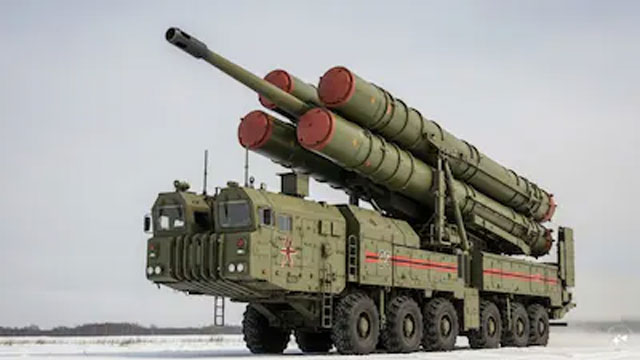
An S-400 squadron is a mobile, integrated air defence system comprising multiple specialised vehicles, typically up to 16 units.
It includes a command-and-control centre, long-range surveillance radars capable of tracking hundreds of targets at distances of up to 600 km, and multifunction engagement radars used for target identification and missile guidance.
The system also consists of mobile launcher units, each capable of carrying multiple interceptor missiles with ranges of up to 400 km, along with support vehicles such as reloading systems, generators and maintenance units.
Defence experts note that the induction of the new squadron will significantly enhance India’s capability to detect, track and neutralise aerial threats, particularly in strategically sensitive regions.