Daijiworld Media Network – New Delhi
New Delhi, Mar 26: The emergence of a new COVID-19 variant, BA.3.2, has sparked fresh concerns worldwide, even as global health agencies maintain that the risk remains limited at present.
The variant, linked to the COVID-19 Omicron lineage, has been identified in at least 23 countries, raising anxiety due to its mutations and potential to evade immunity from prior infection or vaccination.
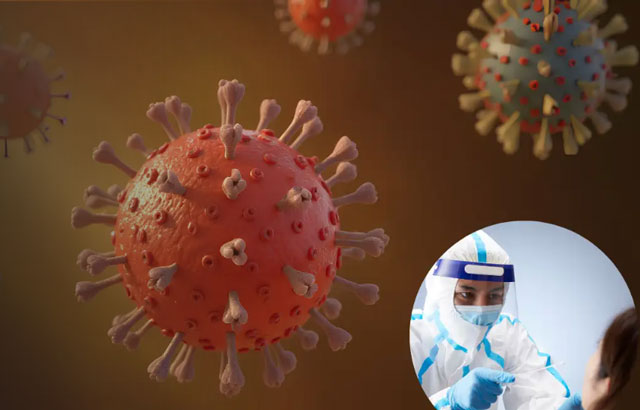
The Centers for Disease Control and Prevention (CDC) has flagged BA.3.2 as a highly mutated strain, noting its presence across multiple regions, including 25 states in the United States.
First detected in a respiratory sample in South Africa in November 2024, the variant has since spread to several countries, including Mozambique, the Netherlands, and Germany. Surveillance data indicates a rise in cases through late 2025, particularly in parts of Europe.
The World Health Organization (WHO) has classified BA.3.2 as a “Variant Under Monitoring” (VUM), indicating that while it carries notable mutations, it has not yet shown significant public health impact.
According to WHO’s initial risk evaluation, the variant has not demonstrated increased severity, hospitalisation rates, or mortality compared to other circulating strains. “Available evidence suggests that BA.3.2 poses low additional public health risk,” the agency stated.
BA.3.2 is a descendant of the Omicron BA.3 lineage and is genetically distinct from earlier variants such as JN.1. It comprises two sub-lineages — BA.3.2.1 and BA.3.2.2 — with multiple mutations in the spike protein, which may reduce immune protection.
Health experts, however, emphasise that existing vaccines are still expected to offer protection against severe illness, despite reduced neutralisation observed in laboratory studies.
While the variant has shown some immune-evasive properties, preliminary data also suggests lower infectivity compared to other strains, offering some reassurance.
Authorities continue to monitor the situation closely, urging vigilance but not panic, as global surveillance and research efforts remain ongoing.