Media Release
Mangaluru, Mar 12: The department of social sciences and humanities under the Institute of Management and Commerce at Srinivas University organised a guest talk series on learning concepts and mental health at its Mukka Campus in February as part of its academic enrichment activities.
The programme was conducted under the guidance of Dr Venkatesh S Amin, dean of the Institute of Management and Commerce, and Prof Joyson Prenky Cardoza, head of the department of social sciences and humanities.
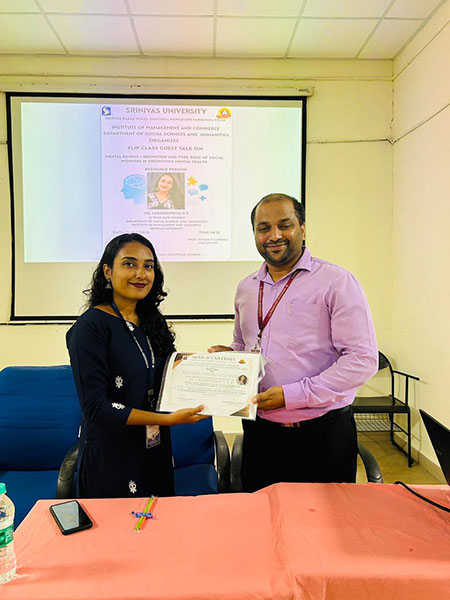
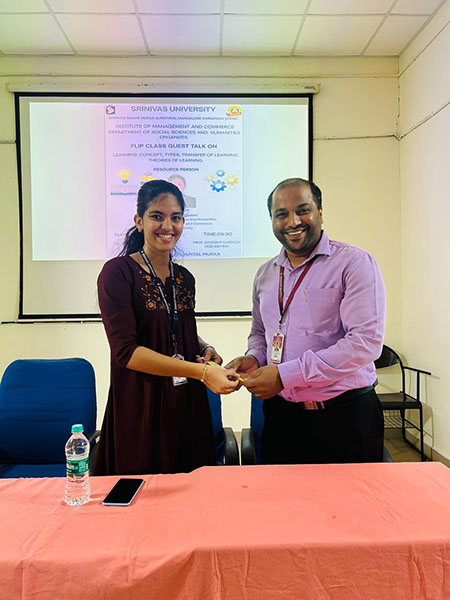
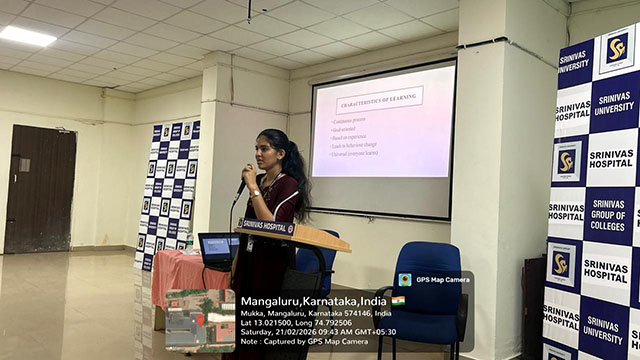
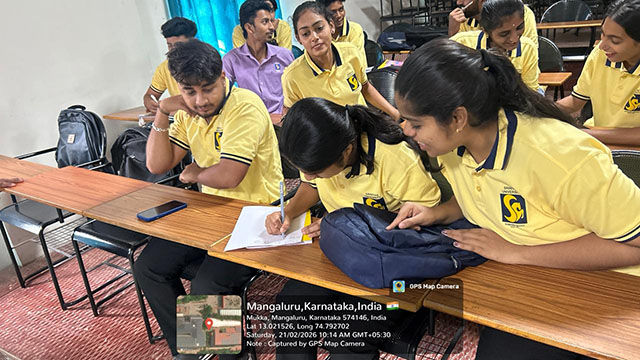
The sessions were delivered by Merlin and Lakshmi Priya, second-year MSW students of the department, who spoke on topics related to learning theories and mental illness.
In the first session, Merlin presented on 'Learning: Concepts, Types, Transfer of Learning and Theories of Learning'. She explained that learning is a continuous process that shapes human behaviour, knowledge, skills and attitudes, enabling individuals to adapt to their environment and develop personal and social competencies.
She elaborated on different types of learning including formal, informal and non-formal learning, providing examples from everyday life. The concept of transfer of learning was also discussed, explaining how knowledge and skills acquired in one situation can influence performance in another. Both positive and negative transfer of learning were explained with practical illustrations.
The speaker further discussed major theories of learning such as Classical Conditioning by Ivan Pavlov, Operant Conditioning by B F Skinner, Trial and Error Learning by Edward Thorndike and Cognitive Learning Theory. Each theory was explained with relevant examples to help students understand their application in educational and social contexts.
In the second session, Lakshmi Priya spoke on 'Mental Illness'. She explained the concept and meaning of mental illness and its impact on an individual’s emotional, psychological and social well-being.
The session highlighted different types of mental health conditions and stressed the importance of early identification, treatment and support. She also discussed the causes and symptoms of mental illness, including biological, psychological and social factors.
Emphasising the need for mental health awareness, the speaker spoke about the role of counselling, rehabilitation and community support systems in addressing mental health challenges. She also highlighted the role of social workers in mental health care through counselling, advocacy, rehabilitation and community-based interventions.
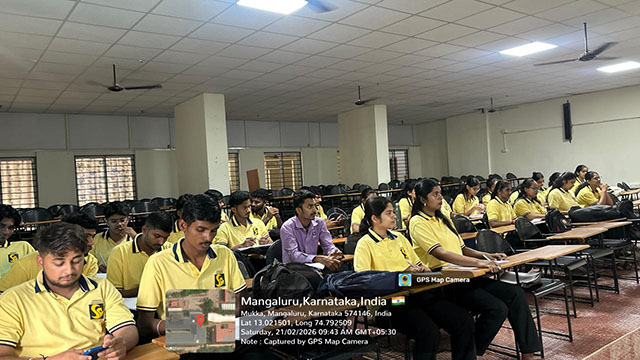
The sessions were highly interactive and provided practical examples and real-life situations that helped students connect theoretical knowledge with field practice. First-year MSW students actively participated in the programme.
The event concluded with an interactive question-and-answer session followed by a vote of thanks, with the department expressing appreciation to the resource persons and participants for making the sessions informative and successful.