Daijiworld Media Network - New Delhi
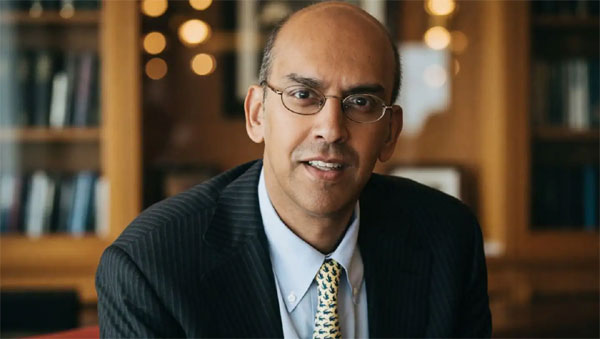
Washington, May 17: Indian-American financier Nirmal Narvekar is set to retire in 2027, bringing to a close a high-profile tenure in which he reshaped the investment strategy behind Harvard University’s massive endowment, one of the largest in the world.
Narvekar, widely known in financial circles as “Narv,” informed Harvard’s governing board that he would step down after a transition period to ensure a smooth succession. His exit marks the end of a transformative and often debated era in the management of Harvard’s $57 billion endowment.
The Harvard endowment, the world’s largest university fund, plays a central role in financing the institution’s operations and long-term commitments. Its scale far exceeds that of most global education budgets and has become a benchmark for institutional investing.
Narvekar joined Harvard University in 2016 after leading Columbia University’s endowment, inheriting a portfolio that had struggled in the aftermath of the 2008 global financial crisis. At the time, Harvard’s investment arm faced criticism for weak performance, internal instability, and heavy losses that forced distressed asset sales.
Over the following decade, he overhauled the system by shifting Harvard’s investment approach toward outsourcing a majority of its assets to external managers, including hedge funds, private equity firms, and venture capital investors. By moving closer to the “Yale model” pioneered by investor David Swensen, Narvekar significantly increased exposure to alternative assets such as venture capital, private equity, and real estate.
Under his leadership, Harvard gained access to high-profile investments in companies such as SpaceX and Stripe, while steadily increasing its allocation to private markets. The strategy delivered strong performance in recent years, with reported annualized returns of 8.1% over a three-year period, placing Harvard among the top-performing Ivy League endowments.
However, his approach also drew criticism from some analysts and university insiders who argued that the increased reliance on illiquid assets exposed the institution to long-term risks. Critics questioned whether such strategies made elite universities overly dependent on complex financial structures and Wall Street-style investment models.
Despite the debate, Narvekar maintained a low public profile throughout his career, focusing on institutional investment management rather than public commentary. Educated at Haverford College and the Wharton School, he built a reputation as a disciplined allocator of capital rather than a public-facing financier.
His tenure also unfolded against a backdrop of broader political and financial pressures on US universities, including debates over federal funding and the growing scrutiny of large endowment-driven institutions.
Narvekar’s departure is expected to trigger a carefully managed transition at Harvard as it prepares for a new era in managing one of the most influential university endowments in global higher education.